
TL;DR:
- Data breach disclosures are legally required notifications informing individuals and regulators about unauthorized access to personal information. The definition of a breach varies by law and case, involving unauthorized access, use, or disclosure that compromises data security. When receiving a breach notice, individuals should assess exposed data, change passwords, and monitor accounts proactively to protect themselves.
If you've ever received a letter saying your personal information "may have been accessed," you've experienced what is data breach disclosure explained in its most direct form. That letter isn't just a courtesy. It's often a legal requirement, governed by a patchwork of state, federal, and international laws that dictate who must tell you what, when, and how. Most people read those notices with confusion or dismiss them entirely. Understanding what they actually mean, and what rights they give you, is the first step toward protecting yourself.
Table of Contents
- Key takeaways
- What constitutes a data breach
- Notification requirements: laws, timelines, and content
- What to expect and how to respond as an individual
- Challenges and controversies in breach disclosure
- My take on why honesty in disclosure actually matters
- How Klaw helps you stay ahead of breaches
- FAQ
Key takeaways
| Point | Details |
|---|---|
| Disclosure is legally required | Most jurisdictions mandate that organizations notify affected individuals and regulators within strict timeframes. |
| Timelines vary dramatically | GDPR requires notice in 72 hours; California allows 30 days; SEC gives public companies just 4 business days. |
| Notices must include specifics | A valid breach notice must explain what happened, what data was exposed, and what steps you should take. |
| Not every incident is a breach | A security incident only becomes a reportable breach when it meets specific legal thresholds defined by applicable law. |
| You have rights after a breach | Depending on your state, you may be entitled to free credit monitoring or identity theft prevention services. |
What constitutes a data breach
Most people assume a data breach means hackers breaking into a system. The legal definition is broader and more nuanced than that. Legally, a data breach is any unauthorized acquisition, access, use, or disclosure of personal information that compromises its security or confidentiality. That covers a lot of ground.
Common breach scenarios include:
- Unauthorized system access: A cybercriminal exploits a vulnerability and downloads customer records.
- Ransomware attacks: Under HIPAA, most ransomware incidents are presumed to involve acquisition of electronic protected health information, making them reportable breaches unless the organization can prove otherwise.
- Accidental disclosures: An employee emails a spreadsheet containing Social Security numbers to the wrong recipient.
- Insider threats: A disgruntled employee downloads and shares client data without authorization.
- Third-party vendor failures: A contractor mishandles data they were entrusted to process on your behalf.
Healthcare adds another layer of complexity. HIPAA presumes breach for any impermissible exposure of protected health information unless a documented four-factor risk assessment demonstrates a low probability that the information was actually compromised. That's a high bar to clear. The practical result is that healthcare organizations must treat most unauthorized PHI exposures as reportable breaches.
Pro Tip: Not every security incident triggers a notification requirement. The key question is whether the incident meets the legal threshold of "compromise." If encrypted data was exposed but the encryption key was never accessed, many laws exempt that from breach status. Always check the specific law that applies to your situation.
A useful distinction: a security incident is any event that threatens information security. A data breach is a subset of incidents where the legal threshold for reportable harm has been crossed. Not every incident is a breach, but every breach starts as an incident. Knowing the difference matters when you're on the receiving end of a notice.
Notification requirements: laws, timelines, and content
Once an organization determines it has experienced a reportable breach, the clock starts. And the timeline depends entirely on which laws apply. This is where data breach reporting requirements become genuinely complicated.
Here's a snapshot of how key legal regimes compare:
| Jurisdiction / Law | Who Must Be Notified | Timeline |
|---|---|---|
| GDPR (European Union) | Supervisory authority; affected individuals if high risk | 72 hours to authority; without undue delay to individuals |
| HIPAA (U.S. healthcare) | HHS and affected individuals; media if large breach | 60 days after discovery |
| California (CCPA / breach law) | Affected California residents | Within 30 days of discovery |
| SEC (public companies) | SEC and investors via Form 8-K | 4 business days after determining materiality |
| New York SHIELD Act | Affected New York residents | In the most expedient time possible |
What goes inside a breach notice is also regulated. A valid notification typically must include:
- A description of what happened and when
- The categories of personal information involved
- Steps the organization has taken to contain the breach
- Recommended protective actions for affected individuals
- Contact information, including a toll-free number in many jurisdictions
Some states go further. New York legislation requires at least 12 months of free identity theft prevention services when the breached organization was the direct source of the exposure. Other states mandate ongoing access to credit reports for months after notification. These aren't optional extras. Failure to include them can violate state mandates and expose the organization to regulatory action.
Pro Tip: GDPR allows phased disclosure. If you don't have all the facts within 72 hours, you can submit an initial notification with what you know and follow up as the investigation progresses. Organizations operating in the EU should build this phased approach into their incident response plans.
The one-size-fits-all approach to breach notification simply doesn't work. A company serving customers in California, New York, and the EU simultaneously faces three different timelines, three different content requirements, and potentially conflicting obligations. Organizations managing multi-state customer bases need jurisdiction-specific playbooks, not a single template letter. Tools like Klaw's incident response workflows are built exactly for this kind of complexity.
What to expect and how to respond as an individual
When a breach notice lands in your inbox or mailbox, it's easy to either panic or ignore it. Neither serves you well. Here's how to read one and respond with purpose.
Step 1: Identify what data was exposed. The notice must tell you which categories of information were involved. Credit card numbers, Social Security numbers, health records, and login credentials each carry different risks and require different responses.
Step 2: Assess the realistic risk. A breach involving your email address alone is far less urgent than one involving your Social Security number and date of birth. Read carefully before deciding how to act.

Step 3: Change affected passwords immediately. If login credentials were exposed, change those passwords on every account where you used them. Credential stuffing attacks, where attackers try stolen username and password combos across dozens of sites, are extremely common after breaches.
Step 4: Claim any free services offered. Organizations are increasingly required by law to provide credit monitoring or identity theft prevention services. Some states mandate ongoing consumer support post-notification. Don't leave those services unclaimed.
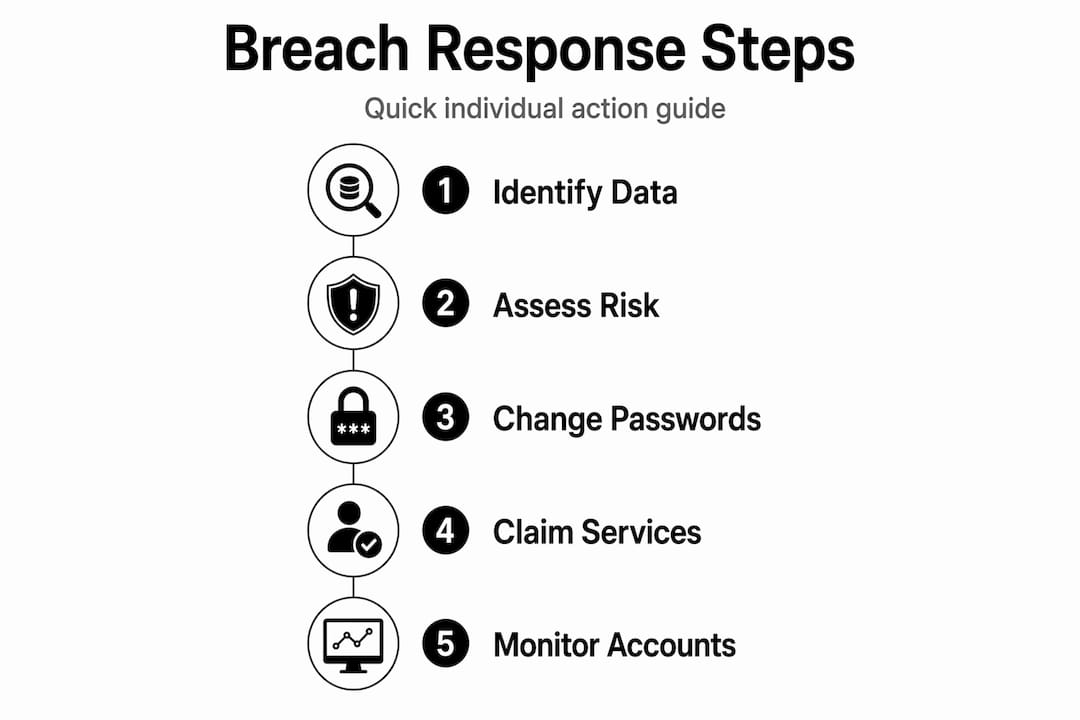
Step 5: Place a fraud alert or credit freeze. A fraud alert asks lenders to verify your identity before extending credit. A credit freeze is stronger and prevents new credit accounts from being opened in your name entirely. Both are free.
Step 6: Monitor your accounts actively. Watch for unfamiliar transactions, new accounts you didn't open, or unexpected collection calls. Identity theft often surfaces weeks or months after a breach.
One scenario many people don't consider: what if you suspect you've been breached but haven't received a notice? Companies sometimes delay notifications, or their notice ends up in your spam folder. Proactive monitoring tools that scan breach databases and alert you to dark web exposure give you visibility that doesn't depend on the breached organization notifying you on time.
Challenges and controversies in breach disclosure
The legal obligation to disclose a breach and the organizational instinct to protect reputation often pull in opposite directions. That tension produces some of the most troubling patterns in data breach disclosure.
Consider the Oracle breach case in 2025. According to reporting, Oracle privately notified affected customers while simultaneously denying the breach publicly. That disconnect led to federal scrutiny and significant reputational damage. It's a textbook example of what happens when private notification and public communication are misaligned.
"Transparency in breach disclosure isn't just a legal checkbox. It's the foundation of trust between an organization and the people whose data it holds. Minimizing a breach in public while quietly notifying victims privately isn't a communications strategy. It's a liability waiting to materialize."
The Oracle situation isn't an anomaly. Delayed or minimized disclosures are more common than most people realize. Organizations sometimes wait to notify because they're still investigating, because they're negotiating with attackers, or because they hope the incident won't become public. Each delay increases the window during which affected individuals have no way to protect themselves.
Regulatory complexity also creates genuine compliance challenges. Managing overlapping breach notification obligations across multiple jurisdictions is genuinely difficult. Definitions of "personal information" vary by state. Some states include biometric data; others don't. Some require notification even when the data was encrypted; others exempt encrypted data. A mid-sized company with customers across 30 states faces a genuinely complicated compliance matrix.
Pro Tip: If you receive a breach notice that seems vague or incomplete, you have the right to ask for more information. Most state laws require organizations to provide a contact for affected individuals. Use it. Ask specifically what data types were involved and what steps the organization has taken to prevent recurrence.
Breach disclosure laws are also evolving rapidly. State legislatures added and amended dozens of breach notification statutes in 2025 and 2026 alone. The trend is toward shorter timelines, broader definitions of personal information, and stronger consumer support requirements. What was compliant practice two years ago may already be outdated.
My take on why honesty in disclosure actually matters
I've spent years watching how organizations handle breach disclosures. The pattern I keep seeing is that the damage from a poorly handled disclosure is almost always worse than the damage from the breach itself.
When a company is transparent, moves fast, and gives affected people clear guidance, trust takes a hit but recovers. When a company delays, minimizes, or gets caught saying one thing publicly while doing another privately, the reputational fallout can be permanent. I've seen organizations survive significant breaches with their customer relationships intact because they disclosed honestly and acted quickly. I've also seen smaller incidents destroy brands because leadership treated disclosure as a PR problem to be managed rather than an obligation to be met.
What I find most frustrating is how rarely individuals are told what they actually need to know. Breach notices are often written by legal teams optimizing for liability, not by communicators trying to help real people take real action. The legally compliant notice and the genuinely useful notice are often two very different documents. You deserve both.
My advice: don't wait for a breach notice to start paying attention. Monitor your exposure proactively. Know your rights under your state's laws. And when a notice does arrive, treat it as the serious document it is.
— Lucky
How Klaw helps you stay ahead of breaches
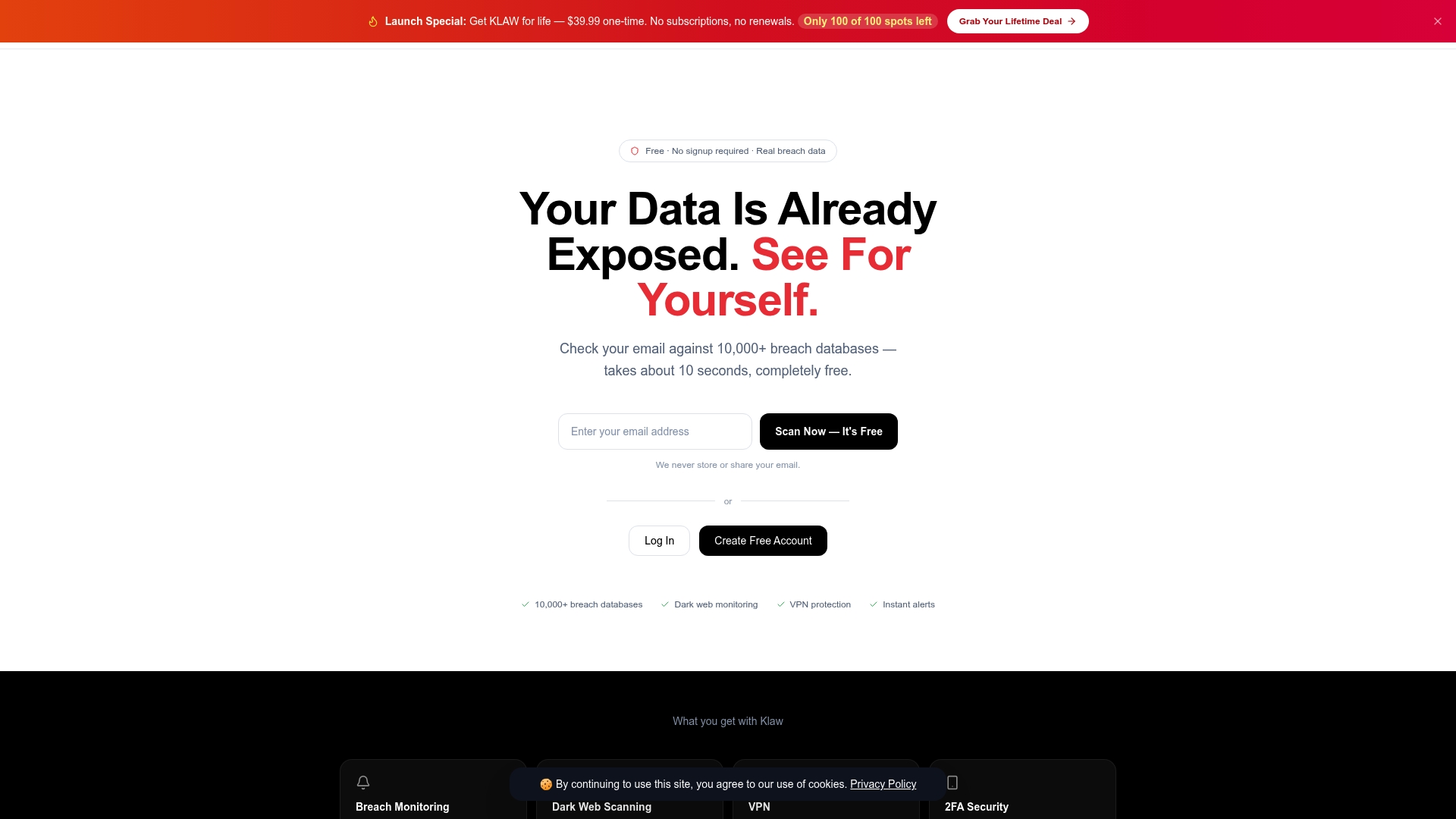
You shouldn't have to rely on a breach notice to find out your data was exposed. Klaw's tools give you visibility that doesn't wait for organizations to notify you on their timeline. With Klaw, you can scan your email against over 10,000 breach databases for free, receive real-time dark web alerts when your credentials appear in new exposures, and access a compliance-ready incident review dashboard that tracks your exposure history. Automated data broker removals reduce your attack surface before a breach even occurs. No subscriptions, no hidden fees. Just clear, honest monitoring that puts your privacy back in your hands.
FAQ
What is data breach disclosure?
Data breach disclosure is the legal and ethical obligation for organizations to notify affected individuals, regulators, and sometimes the public when personal information has been accessed, acquired, or exposed without authorization.
How soon must a company notify you after a breach?
Timelines vary by law. GDPR requires regulatory notification within 72 hours; California gives companies 30 days; the SEC requires public companies to disclose material incidents within 4 business days of determining materiality.
What should a breach notification include?
A valid breach notice must describe what happened, which types of data were involved, what the organization is doing to respond, and what steps you can take to protect yourself, including contact information for further questions.
What constitutes a data breach under HIPAA?
Under HIPAA, any impermissible access or disclosure of protected health information is presumed a reportable breach unless the organization completes a documented four-factor risk assessment showing a low probability of actual compromise.
What can you do if you haven't received a breach notice but suspect exposure?
You can proactively scan your email against breach databases, place a fraud alert or credit freeze with the major credit bureaus, and use dark web monitoring tools to detect whether your credentials have appeared in known breach data.