Keeping personal and business credentials out of data breaches and preventing identity theft is time consuming when identity protection software locks essentials behind expensive subscriptions or misses underground threat sources. Many popular platforms limit breach monitoring to public leaks, offer only basic scans on free tiers, or require slow manual steps for containment and privacy cleanup. This guide compares lifetime cost, breach detection scope, automation depth, and privacy tool availability across four identity protection software options so you can match one to your privacy needs and budget without overpaying for gaps.
Table of Contents
KLAW
At a Glance
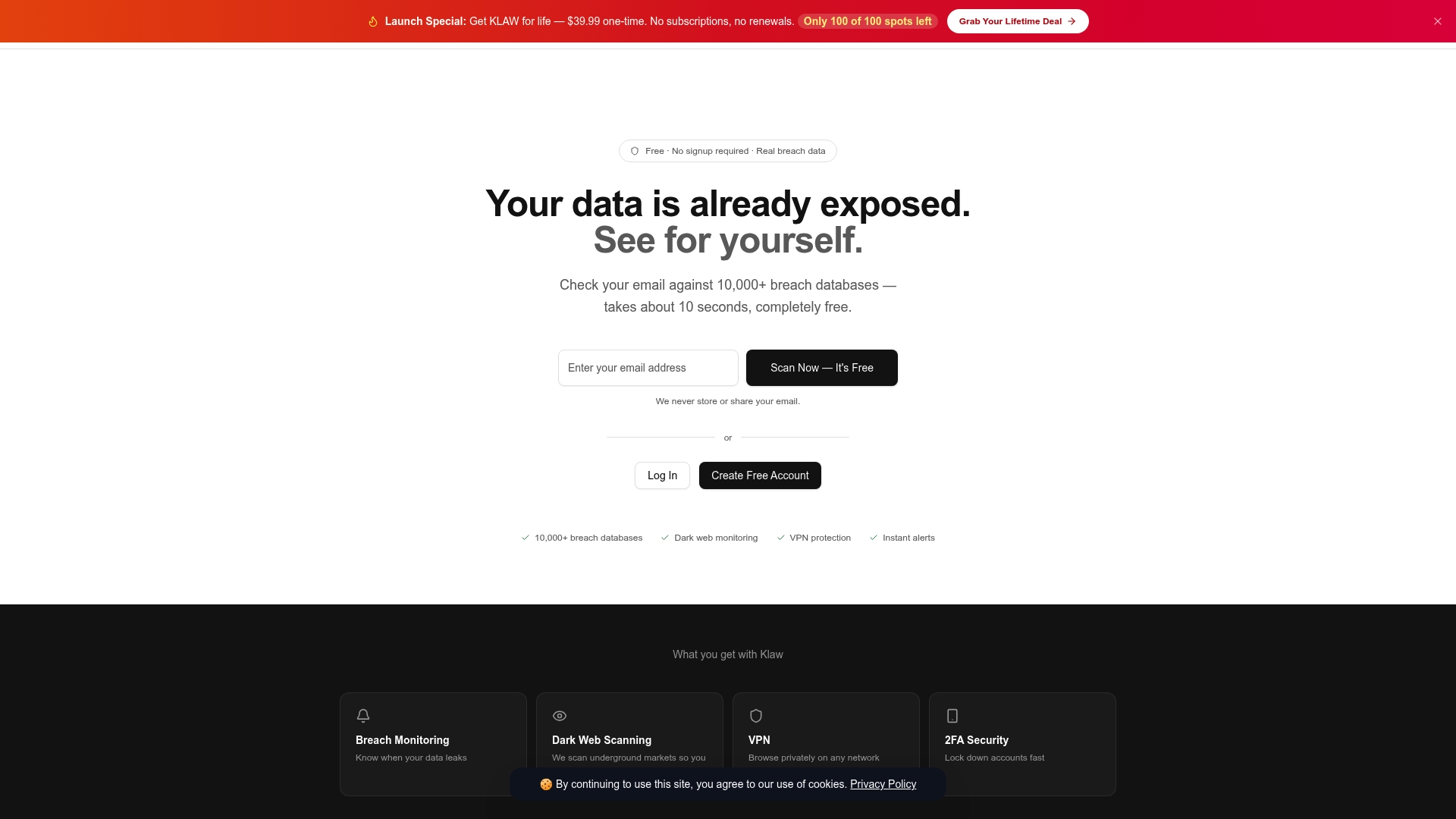
KLAW reports it can scan emails against over 10,000 breach databases for free, a scope the vendor highlights as a core detection advantage. The platform pairs continuous breach monitoring with dark web scanning, real-time alerts, and built-in VPN access for ongoing privacy protection.
Core Features
Unlimited breach scans and dark web credential scanning run continuously, with automated monitoring and instant alerts when exposures appear.
The service includes Unlimited VPN access, two-factor authentication, and data broker opt-out assistance that ranges from self-service to priority review for paid tiers.
Role-based access and audit logs support organizational control, while individual accounts get guided breach response and recovery steps.
Key Differentiator
A one-time Lifetime personal plan at a fixed fee stands out: KLAW offers continuous breach scanning and privacy tools without a subscription for personal users, converting ongoing monitoring into a single upfront purchase.
That model is paired with standard monthly plans for businesses and an explicit free tier for basic scans.
Pros
-
Lifetime option reduces recurring costs for individuals who want ongoing monitoring without subscription payments; practical for users who dislike monthly fees.
-
Comprehensive breach and dark web monitoring centralizes exposure checks and alerting so you don’t juggle multiple services when a credential shows up where it shouldn’t.
-
Clear pricing tiers and a Free plan let curious users test basic scans before committing to a paid tier, lowering the bar to start monitoring.
-
Enterprise features include role-based access and audit logs, which help small security teams keep track of incidents and user actions.
-
Built-in privacy tools such as VPN access and automated data broker removal reduce the manual steps involved in cleaning up an exposed identity.
Cons
- Enterprise customers report occasional response delays in incident handling and gaps in detection coverage, which can slow containment for larger, time-sensitive breaches.
Who It's For
Individuals who want affordable, ongoing breach monitoring and privacy controls without subscription overhead will find the lifetime option attractive. Small to medium businesses and security teams that need centralized monitoring, user roles, and audit trails will also benefit, though larger enterprises should validate response SLAs.
Unique Value Proposition
A single, upfront purchase for lifetime personal monitoring converts a recurring cost into a predictable, one-time expense. That shift changes budgeting for people protecting personal accounts and for small business owners who prefer one-off security investments rather than ongoing subscriptions.
The result: immediate access to continuous scans, VPN, and data broker removals without monthly billing for the buyer who takes the lifetime route.
Real World Use Case
A small business buys a mid-tier plan to monitor employee emails and set up role-based alerts. When a staff credential appears in a third-party leak, the team gets an instant alert, uses audit logs to trace exposure, and triggers the internal response workflow while employees reset affected credentials.
An individual uses the lifetime plan to run unlimited scans, receive instant alerts, and request automated data broker removals after learning an old email was exposed.
Pricing
Basic breach scans are free. Paid plans start at $9 per month for core monitoring and go up to $39 per month for priority coverage. A limited-time lifetime deal is advertised at $39.99 as a one-time purchase.
Website: https://klawusa.org
Flare
At a Glance
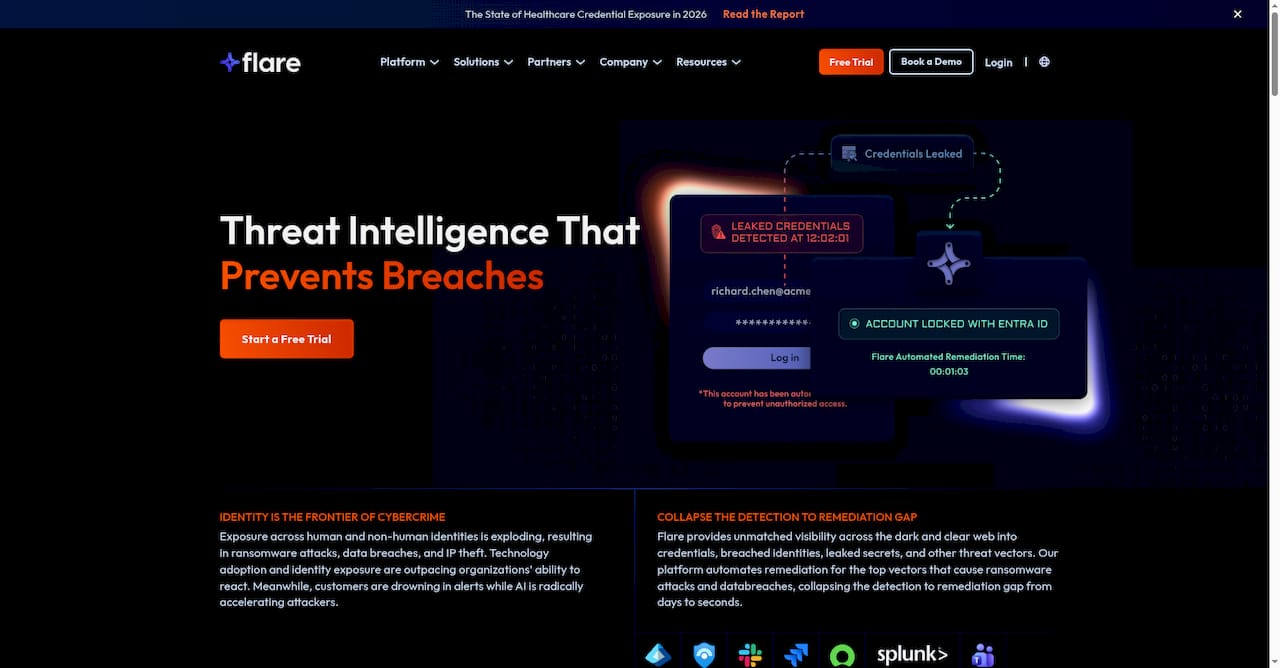
Unmatched visibility across dark web, clear web, and Telegram sources powers Flare's threat exposure feed, giving security teams rapid sightlines into leaked credentials and identity data. The platform combines automated detection with remediation workflows to shorten investigation loops.
Core Features
Flare collects signals from underground forums, Telegram channels, and public breach repositories to surface exposed identities and credentials. It pairs that telemetry with AI driven risk scoring and automated remediation playbooks that plug into existing incident workflows.
Flare also supports enterprise identity connections, notably Microsoft Entra ID, and forwards prioritized alerts into SIEMs or ticketing systems for triage by security operations.
Key Differentiator
Flare's standout is continuous monitoring of underground sources plus built-in remediation that ties directly into CI and incident systems. That combination aims to close the gap between detection and action by automating containment steps once an exposure is verified.
Pros
- Helpful professional staff reported by users, which eases onboarding and customization for complex detection rules.
- The interface is clean and focused so analysts can triage alerts quickly without sifting through noise.
- Strong real time data collection and automation reduces manual lookup work for threat analysts and speeds investigation handoffs.
- Wide integration options let teams route findings into existing SIEM, SOAR, and ticketing workflows rather than rebuild processes.
Cons
- Third party reports mention unresponsive customer support in some cases, which can be problematic during urgent incidents.
- Several users report long delays during application processing and account setup that extend implementation timelines.
- Communication gaps and difficulty submitting required documents have created friction for some customers.
- There are a few accounts of misleading support interactions according to external feedback, which raises caution during procurement.
When It May Not Fit
If your security operations require guaranteed SLA driven support for 24 7 incident response, Flare's reported support delays could be a blocker. Teams that need plug and play deployment within days may also find setup timelines longer than expected.
Notable Integrations
- Microsoft Entra ID for identity enrichment and automated remediation workflows
- SIEMs for centralized logging and correlation
- SOAR platforms for automated playbook execution
- Ticketing systems to create and track remediation tasks
Who It's For
Security teams at mid to large organizations that need proactive external threat intelligence and want to automate containment steps into existing CI and incident workflows. Best for teams that can tolerate a longer onboarding window in exchange for deep underground coverage.
Real World Use Case
Flare's marketing materials cite a North American bank that reduced incident response time from days to seconds by using automated credential detection and remediation. That case illustrates how pairing underground monitoring with automatic containment can stop account takeover attempts faster than manual processes.
Pricing
Not applicable — informational only. Flare does not publish standard list pricing in the provided product data so procurement will require direct contact or a demo to learn licensing and tier details.
Website: https://flare.io
Getflare
At a Glance
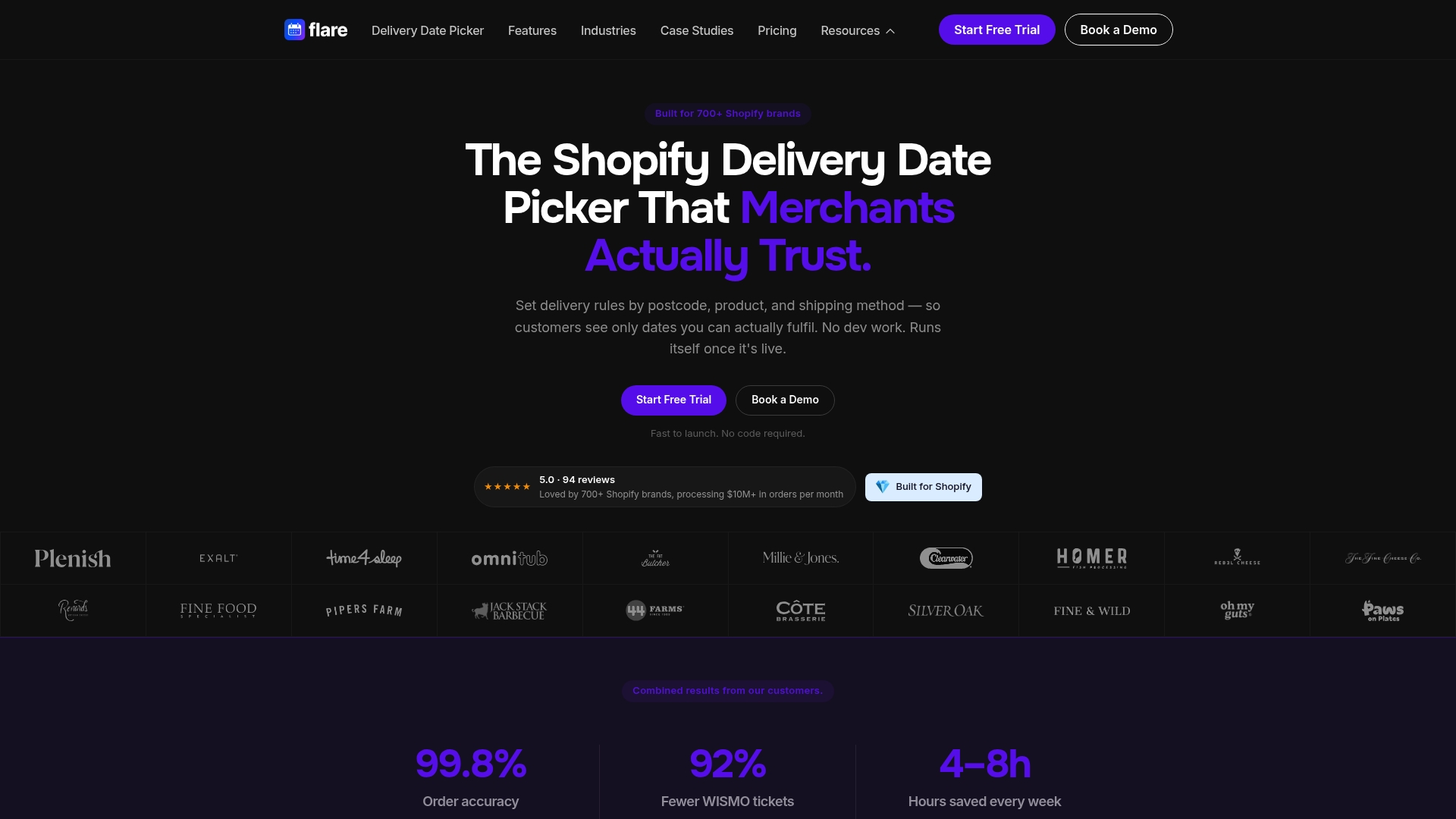
Getflare reports processing over $10M in orders monthly across more than 700 Shopify brands. These figures are vendor reported.
The app brings delivery date picking and deep shipping rule logic into Shopify checkout without custom development. That combination reduces delivery uncertainty and support friction for merchants with complex zones and products.
Core Features
- Set delivery rules by postcode, product, and shipping method so customers see accurate delivery windows at checkout.
- Integration with carrier services like FedEx and UPS and connectors for 3PLs such as ShipStation and ShipBob to automate fulfillment flows.
- Flexible dispatch and delivery date options with order tagging and fulfillment syncs back to Shopify and connected 3PLs.
- Native checkout support on Shopify Plus and standard plans for validated date selection during payment.
Key Differentiator
Getflare pairs a native Shopify checkout extension with enterprise grade delivery rule automation so merchants get validated date selection at payment and complex rule handling without engineering time. That tight checkout integration is the core operational advantage over apps that operate post purchase.
Pros
- High rule depth handles postcode level rules, product lead times, and shipping method constraints so you can encode real world logistics directly in the app.
- Native checkout validation reduces failed or incorrect delivery promises by confirming dates before payment.
- Automates fulfillment tagging and syncs to 3PLs which lowers manual handoffs and keeps inventory and shipping status consistent.
- Easy setup without code gets stores live quickly which helps teams test date logic and measure conversion impact sooner.
- Works across multiple verticals so configurations can be adapted for perishable goods, bulky items, or subscription shipments.
Cons
- Support responsiveness has mixed reports which could be a problem during peak season incidents when rapid troubleshooting matters.
- Merchants with extremely bespoke logistics platforms may hit integration limits and require custom engineering to close gaps.
- The depth of rule options introduces a configuration surface that can be overwhelming for teams without a defined logistics owner.
When It May Not Fit
If your store requires a white labeled checkout or a checkout flow that diverges heavily from Shopify native pages then Getflare's native extension may not match your custom design needs.
If your logistics stack depends on proprietary APIs not listed among common carriers or 3PLs you will likely need custom middleware and that reduces the no code benefit.
Who It's For
Shopify merchants with high delivery complexity who need postcode level accuracy, multiple carrier rules, and automated 3PL handoffs. Best for stores that want to reduce delivery support tickets and validate delivery dates at the moment of purchase without hiring developers.
Real World Use Case
A regional food retailer used Getflare to present delivery windows by postcode and product. The store automated fulfillment tags to ShipBob and stopped manual date confirmations. Customer support tickets about delivery timing dropped and checkout conversion improved after launch.
Pricing
Plans start at $39 per month for the Organised plan. Pricing scales with GMV and order volume. There are no setup fees or contracts and annual billing discounts are available for merchants who commit.
Website: https://getflare.co.uk
Flotiq
At a Glance
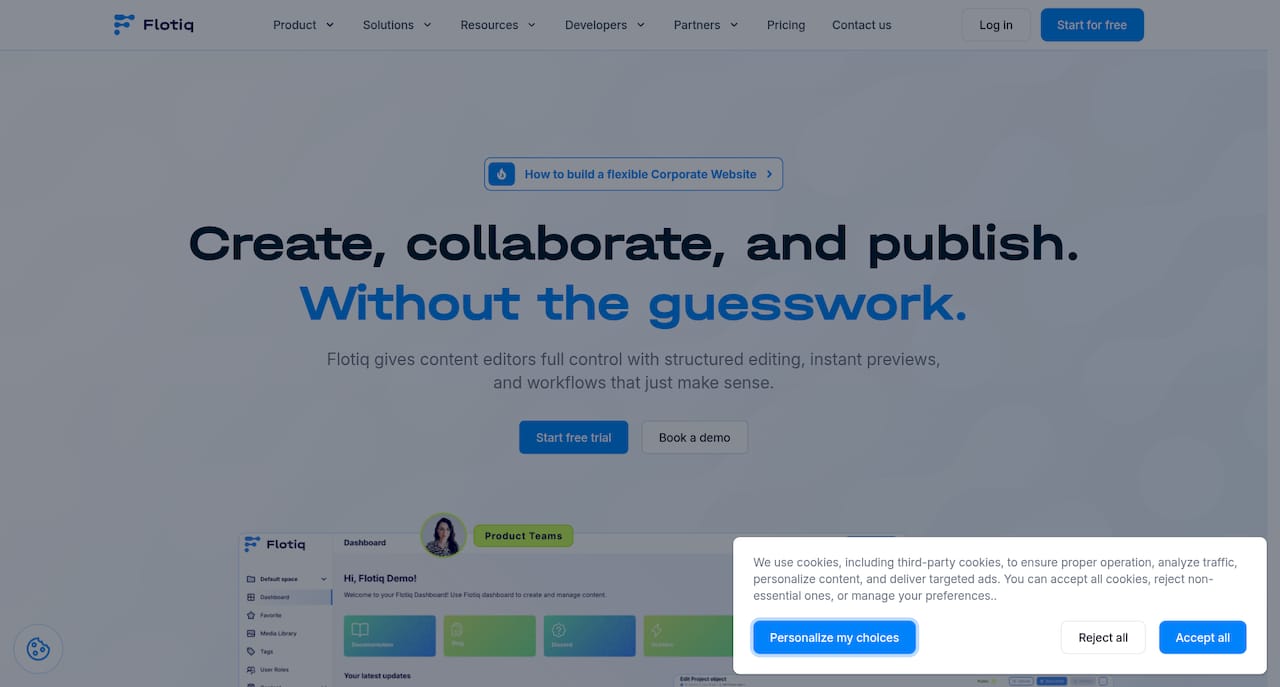
OpenAPI compatible schema generation and SDK scaffolding are built into the CMS, so teams can generate API contracts and client libraries from their content models without extra tooling. The platform emphasizes structured editing, instant previews, and multilingual workflows for omnichannel delivery.
Core Features
- API-first headless content editing with structured content models and OpenAPI-compatible schemas.
- Instant live previews and real-time content updates for editors and developers to validate changes before publishing.
- Content scheduling, version history, and multilingual management with DeepL integration for translation workflows.
- SDK generation and developer tooling to speed client integration and deployment.
Key Differentiator
Flotiq centers its product around automated API schema generation plus out-of-the-box SDK support, which accelerates developer integration and reduces handoff friction. Compared with Klaw’s breach-monitoring focus, Flotiq targets teams building structured, multilingual content platforms rather than security or identity tooling.
Pros
- Effortless API design. Generating OpenAPI schemas from content models removes a common developer bottleneck when launching headless projects.
- Editor-friendly previews. Real-time previews shorten the edit publish loop and reduce layout regressions on client sites.
- Multilingual support with DeepL integration speeds translation workflows for global sites and apps.
- Strong developer resources. The vendor advertises comprehensive documentation and SDKs that cut initial integration time.
- Scheduling and version control provide workflow governance for distributed teams managing many channels.
Cons
- Third-party reviews included in the product data report no major negatives; external critiques are sparse.
- Pricing information in the supplied data is limited: a free tier exists but paid plans are described only as varying by needs.
- The product data does not list operational limits or service level details, so buyers must request specifics for large scale or enterprise use.
Notable Integrations
- Surfer SEO
- Zapier
- Vercel
- DeepL
- Google Search Console
Who It's For
Development teams and content managers building scalable, structured digital experiences who want a developer-friendly CMS with built-in API tooling. Good fit for agencies and engineering-led product teams that deploy content across web, mobile, and other channels.
Real World Use Case
A digital agency centralizes content for multiple client sites in Flotiq, uses the OpenAPI schemas to generate client SDKs for static sites, and leverages scheduling plus DeepL to publish coordinated multilingual campaigns quickly.
Pricing
A free tier is available. Paid plans are described in the product data as variable and tailored to needs, so expect pricing to scale with usage, feature set, or support level.
Website: https://flotiq.com
Comparative Analysis of Identity Protection Tools
The following analysis examines the key distinctions among the featured identity protection solutions. Considering factors such as pricing, usability, and integrations, we aim to highlight where each service shines and which user scenarios align with each offering.
Pricing Structures and Accessibility
KLAW provides a unique pricing model with its lifetime personal plan, allowing users to make a single payment for ongoing breach monitoring and privacy tools without recurring subscriptions. This contrasts with services like Flare, which do not publicly disclose standard pricing, creating additional steps for prospective customers to evaluate costs. While KLAW's model is appealing for those who prefer predictable costs, businesses needing dynamic and scalable subscription tiers might favor other options.
Integration and Feature Breadth
Flare excels in integrating extensive threat intelligence into existing enterprise workflows, including Microsoft Entra ID and other well-known systems. This robustness empowers large organizations to enhance their cybersecurity infrastructure. Conversely, Getflare, with its focus on ecommerce logistics, highlights its specialty within Shopify-based implementations, offering shipping and rule-management features.
Flotiq stands apart with its specialized utility in content structuring and multilingual CMS solutions, catering specifically to development teams rather than security-focused users. This distinction limits its appropriateness as a direct alternative for identity protection needs.
Best Fit Recommendations
- KLAW: Great for individuals or small organizations seeking cost-effective, ongoing breach monitoring and privacy management through a one-time purchase.
- Flare: Best choice for medium-to-large enterprises requiring expansive integration capabilities and underground data monitoring tied to automated remediation workflows.
- Getflare: for Shopify merchants aiming to streamline delivery rules and enhance checkout experiences with accurate logistical controls.
- Flotiq: Suitable for development teams building API-centric, multilingual content platforms that require efficient structuring and deployment.
Our Pick
For identity protection, KLAW stands out due to its lifetime personal plan, providing considerable value to individuals and smaller entities. Its balanced mix of real-time monitoring and user-friendly tools makes it a versatile choice. However, larger enterprises looking for integrated operational capabilities would likely prefer Flare for its extensive workflow incorporation.
Identity Protection Software Comparison
When selecting identity protection software, it's essential to evaluate features, pricing options, and limitations to choose the best fit for your needs.
| Product | Core Feature | Key Differentiator | Best For | Pricing | Notable Limitation |
|---|---|---|---|---|---|
| Klaw | Comprehensive breach monitoring | Lifetime plan for individual users | Individuals and SMBs preferring one-time payment | Free basic scans; Plans from $9/mo, lifetime $39.99 | Occasional response delays for enterprise cases |
| Flare | Underground credential monitoring | Automated remediation and CI integration | Large security teams with automation needs | Not disclosed | Unresponsive support during urgent incidents |
| Getflare | Email monitoring and shipping logic | Shopify-native shipping rules automation | Shopify merchants with delivery complexities | From $39/mo | Mixed support responsiveness; limited bespoke platform compatibility |
| Flotiq | Headless CMS with API generation | Automated API schema creation | Developers managing structured content | Free tier available; Paid plans variable | Lacked detailed operational or pricing specifics in product data |
Discover a Practical Flare.io Alternative for Continuous Online Privacy
Facing the challenge of monitoring potential data breaches and identity risks with minimal hassle can feel overwhelming. The article about flare.io alternatives highlights the need for solutions offering real-time alerts, deep breach database scanning, and innovative privacy tools without subscription complications. Klaw addresses these pain points by providing free scans against over 10,000 breach databases, instant breach notifications, automated data broker removals, and built-in VPN access to protect your online presence easily.
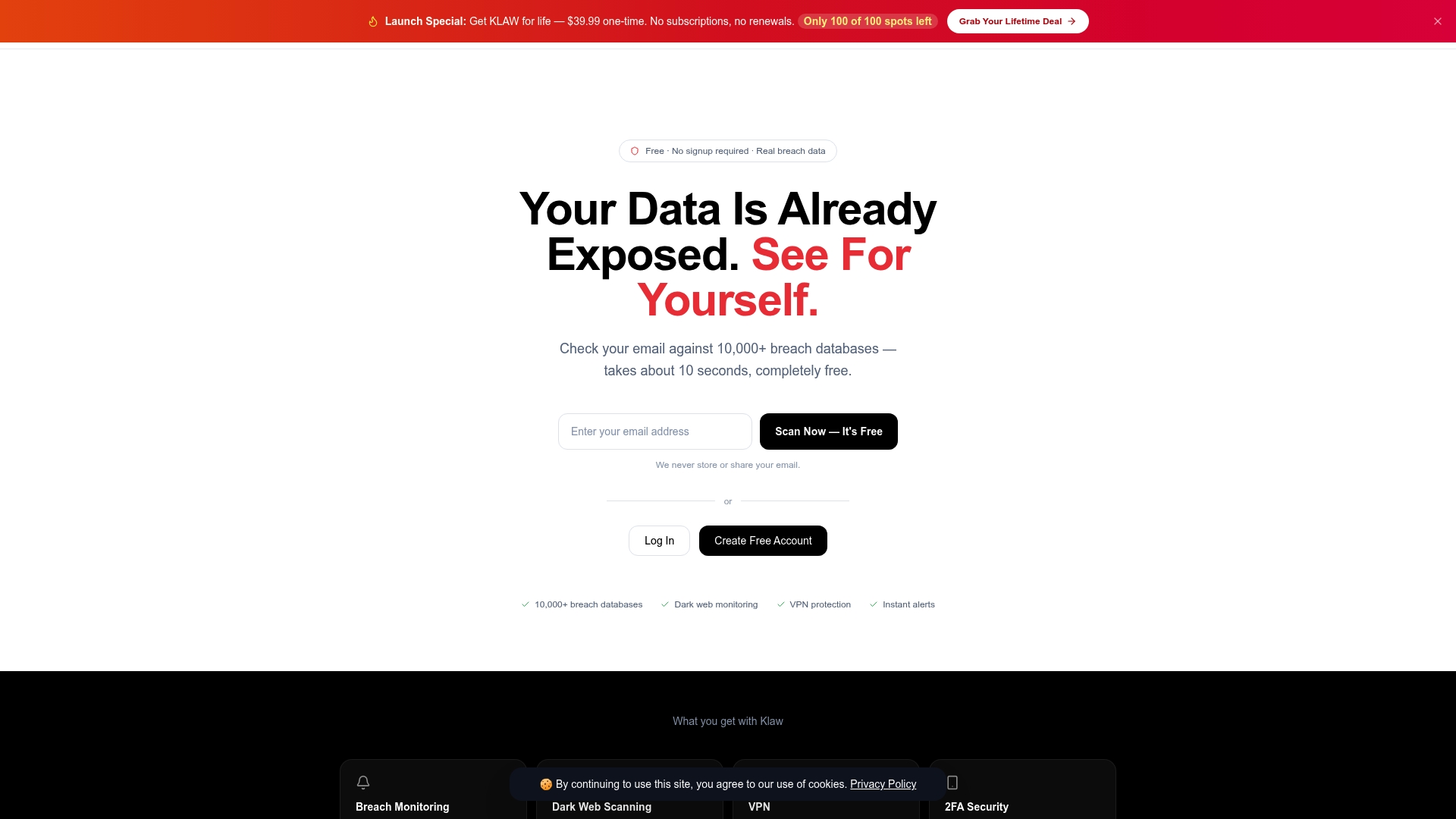
Explore how Klaw combines continuous breach monitoring with practical privacy controls to help you stay ahead of identity exposures without monthly fees. Visit Klaw’s website now and activate lifetime personal breach scanning to receive instant alerts and secure your data. Take control of your online security and request automated cleanup for exposed accounts today.
Frequently Asked Questions
What feature allows Klaw to provide ongoing monitoring without subscription fees?
Klaw offers a Lifetime personal plan that allows users to access continuous breach scanning and privacy tools as a one-time purchase. This feature sets it apart as individuals looking for a long-lasting solution can avoid the recurring monthly fees typical of other services. Users should consider Klaw for an economical approach to identity protection without ongoing costs.
How does the support responsiveness of Klaw compare to Flare?
Flare has received positive feedback for its helpful professional staff, aiding with onboarding and customization, while Klaw's support structure should also meet expectations for most users. The distinctiveness between the two lies in Klaw's focus on providing a lifetime plan without monthly fees, making it suitable for those who prefer budget certainty. Individuals may find Klaw a solid choice, especially if they prioritize affordability and ongoing support.
Does Klaw offer features to help with data broker removal?
Yes, Klaw provides data broker opt-out assistance that ranges from self-service options to priority review for paid tiers. This ensures users can actively clean up their exposed identity across various platforms. Individuals concerned about their data privacy should explore these features for enhanced protection.
What types of organizations can benefit from Klaw's features?
Klaw is ideal for individuals seeking affordable ongoing breach monitoring and privacy controls, as well as small to medium businesses needing centralized monitoring and user roles. Organizations should consider Klaw for its accessible lifetime option and structured support for managing identity protection effectively.
How often does Klaw run breach scans compared to other services?
Klaw runs unlimited breach scans and dark web credential scans continuously, providing instant alerts when exposures appear. This feature allows users to stay proactive in monitoring their identity across various platforms. Users should expect timely notifications to manage their digital security effectively.