
TL;DR:
- A data breach response plan is a pre-approved procedure guide for handling unauthorized data access. Small businesses must assign roles, contain the breach quickly, and communicate clearly to limit damage. Regular testing and updates are essential to ensure effective response and maintain regulatory compliance.
A data breach response plan is a documented, pre-approved sequence of actions your business follows the moment unauthorized access to sensitive data is confirmed. Without one, your team wastes the most critical hours debating who does what instead of containing the damage. Small businesses are not exempt from breaches, and the cost of unpreparedness shows up fast: in lost customer trust, regulatory fines, and operational chaos. This guide walks you through how to create a business data breach response plan that is clear, tested, and ready to execute under pressure.

How to create a business data breach response plan
The single biggest reason breach responses fail is the absence of a pre-approved plan. Delays in developing a response plan until after a breach cause critical early hours to be wasted on internal debate rather than containment. Think of your plan as a pre-approved operating system for decisions during chaos. It removes the need for consensus in the moment and gives every team member a clear lane to operate in. The industry standard term for this document is an incident response plan, and that term carries weight with regulators, insurers, and legal counsel.
Your plan must cover five core areas: team structure, immediate containment, communication, legal notification, and post-incident review. Each area needs written procedures, named owners, and pre-approved templates. A plan that lives only in someone's head is not a plan. Document everything, store copies offline, and make sure every team member knows where to find it.
Who should be on your data breach response team?
Your response team is the engine of the plan. Assign these roles before any incident occurs, because predefined teams with authority are what enable rapid decision-making when time is short.
Core roles every small business needs:
- Incident manager. The decision-maker who coordinates all response activities and has final authority on containment and communication calls.
- Lead investigator. Responsible for identifying the breach vector, scope, and affected systems. This can be an internal IT lead or an external forensic consultant.
- Communications lead. Drafts and approves all internal and external messaging. Tools like Grammarly help maintain clarity and professionalism under pressure.
- Documentation lead. Records every action, timestamp, and decision throughout the incident for legal and audit purposes.
- Legal and HR advisors. Provide guidance on regulatory obligations, employee privacy, and liability. These are often external roles for small businesses.
Small businesses rarely have a dedicated security team. That is fine. A two-person IT department can cover the investigator and documentation roles. A trusted attorney on retainer covers legal. The key is that every role has a named person assigned before the breach happens.
Pro Tip: Keep a printed, offline contact list for your entire response team. If your corporate email or Slack is compromised, you need another way to reach people fast.
What are the immediate containment steps in the first 24 hours?
The first 24 hours after a breach are critical for stabilizing systems and preserving forensic evidence. By 72 hours, you must be ready for legal notification. By 30 days, full remediation should be underway. Speed and precision in the first day determine how much damage you can limit.
Follow these steps in order:
- Isolate affected systems without shutting them down. Immediate system shutdown destroys volatile evidence. Disconnect compromised machines from the network but keep them running to preserve logs and memory for forensic analysis.
- Switch to out-of-band communication immediately. Using compromised corporate channels during a breach risks attacker monitoring. Use pre-arranged encrypted messaging apps or a phone tree instead.
- Document every action with timestamps. Your documentation lead should log who did what, when, and why. This record protects you legally and supports your post-incident review.
- Classify the breached data. Identify whether the exposed data includes personally identifiable information (PII), protected health information (PHI), or financial account numbers. The data type determines your notification obligations and deadlines.
- Identify the breach vector. Find out how the attacker got in. Whether it was a phishing email, an unpatched server, or a compromised vendor credential, you cannot fix what you have not identified.
Pro Tip: Pre-arrange your out-of-band communication channel before any incident. Signal, WhatsApp Business, or a simple phone tree all work. The tool matters less than having it set up and tested in advance.
How do you communicate effectively during a data breach?
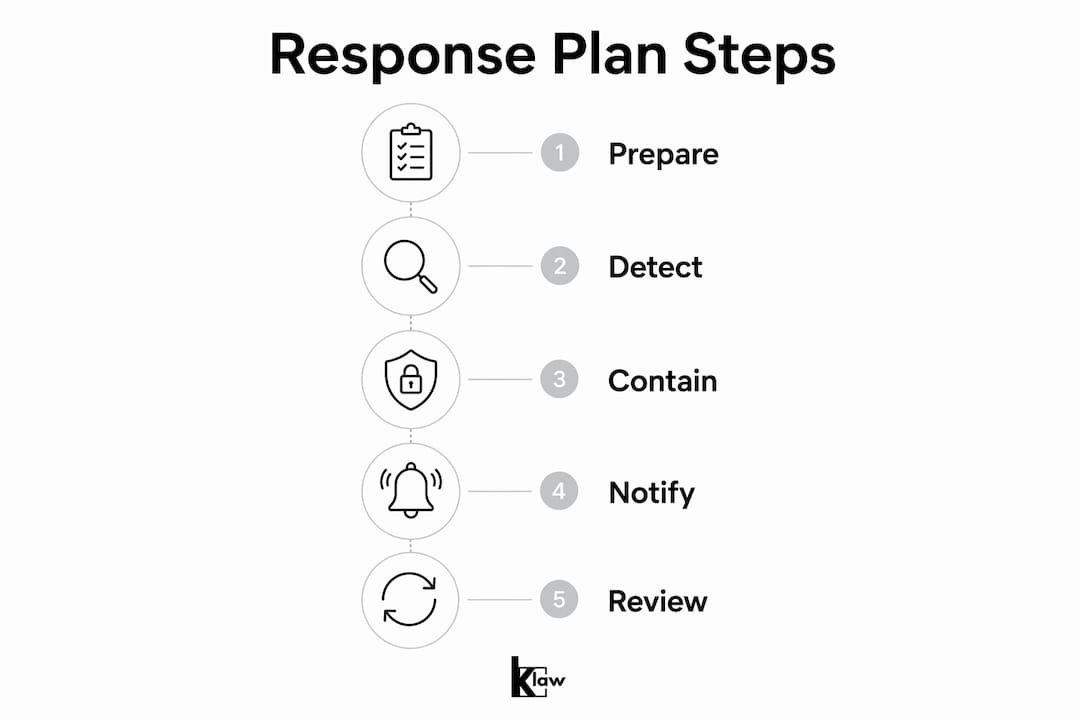
Communication during a breach is where small businesses most often lose customer trust. A clear data protection response plan includes pre-written templates for every audience, because drafting messages under stress produces inconsistent, legally risky content.
Your communication strategy must address five distinct audiences:
- Employees. Notify affected staff immediately. Tell them what happened, what they should and should not do, and who to contact with questions.
- Customers. Send a direct, factual notification. Avoid vague language. State what data was exposed, what you are doing about it, and what customers should do to protect themselves.
- Regulators. Notifying regulatory authorities within 72 hours of confirming a breach is a widely mandated legal obligation. Prepare this notification template in advance.
- Business partners and vendors. If the breach affects shared systems or data, partners need to know quickly so they can protect their own operations.
- Investors and board members. For businesses with investors, a factual briefing protects relationships and limits liability exposure.
Transparency is the right approach, but it has limits. Do not disclose details that could help attackers cover their tracks or exploit additional vulnerabilities. Your legal advisor should review all external communications before they go out. For notification letter drafting, tools like Grammarly and document templates from the National Institute of Standards and Technology (NIST) provide solid starting frameworks.
What are the legal notification requirements small businesses must follow?
Legal compliance is not optional, and the clock starts the moment you confirm a breach. The notification obligation to supervisory authorities begins at breach confirmation, not at the conclusion of your investigation. That distinction catches many small businesses off guard.
The type of data exposed determines which laws apply and what you must disclose. Understanding breach notification law is a non-negotiable part of your incident response plan.
| Data type | Applicable framework | Notification deadline |
|---|---|---|
| Personally identifiable information (PII) | State breach notification laws, GDPR | 72 hours to regulators; varies by state for individuals |
| Protected health information (PHI) | HIPAA Breach Notification Rule | 60 days from discovery |
| Financial account numbers | Gramm-Leach-Bliley Act, PCI DSS | As soon as feasible |
| General business data | Varies by jurisdiction | Depends on state law |
Document every step of your breach response for audit purposes. Regulators reviewing your incident will look for evidence that you acted promptly and in good faith. Businesses that cannot produce a clear timeline of actions face steeper penalties. Non-compliance consequences range from significant fines to reputational damage that outlasts the breach itself.
Your plan should include a simple decision tree: if this data type was exposed, notify these authorities within this timeframe. Pre-fill the template with your business details so your team only needs to add the breach-specific facts.
How to review and improve your response plan after an incident
A post-incident review is not optional. After containment, a formal lessons-learned review including root cause analysis and timeline reconstruction should drive updates to your plan. Without this step, you repeat the same mistakes.
Structure your post-incident review around these actions:
- Reconstruct the full timeline. Map every event from initial breach to full containment. Identify where delays occurred and why.
- Analyze the root cause. Was it a phishing attack, a weak password, an unpatched system, or a vendor failure? The root cause determines your remediation priority.
- Update roles and contact lists. People change jobs. Phone numbers change. Review every name and contact detail in your plan after each incident.
- Revise communication templates. If your customer notification felt clunky or your regulatory filing was incomplete, fix the template now.
- Schedule your next tabletop exercise. Annual tabletop exercises detect weaknesses and improve team readiness before a real incident forces the lesson.
The goal of the review is a better plan, not blame. Keep the tone constructive and involve every stakeholder who played a role in the response. Track improvements over time so you can demonstrate progress to regulators and insurers.
Pro Tip: Collect written feedback from every team member within 48 hours of incident resolution, while details are still fresh. A short survey works better than a group meeting for honest input.
Key Takeaways
A tested, simple incident response plan is the single most effective tool a small business has for limiting the damage of a data breach.
| Point | Details |
|---|---|
| Build the team before a breach | Assign named roles with clear authority so decisions happen fast, not by committee. |
| Contain first, then investigate | Isolate systems without shutting them down to preserve forensic evidence. |
| Know your notification deadlines | The 72-hour regulatory clock starts at breach confirmation, not investigation end. |
| Communicate to all five audiences | Employees, customers, regulators, partners, and investors each need a tailored message. |
| Review and test regularly | Annual tabletop exercises and post-incident reviews keep the plan current and effective. |
What I have learned from watching small businesses handle breaches
Most small business owners I have spoken with assume a data breach is a technical problem. It is not. It is a decision-making problem. The businesses that recover fastest are not the ones with the most sophisticated security tools. They are the ones with a clear, practiced plan that tells every person exactly what to do in the first hour.
The uncomfortable truth is that overly complex plans are not followed under stress. A 40-page incident response manual sounds thorough. In a real breach, nobody reads it. The plans that actually work fit on a few pages, use plain language, and have been walked through at least once in a tabletop exercise. Simplicity is not a shortcut. It is the point.
I also see businesses underinvest in the communication side of their plan. They spend hours on technical containment and then send a vague, lawyer-approved email to customers that says almost nothing. That email destroys more trust than the breach itself. Write your customer notification template now, before you need it, and have a real human being read it for clarity.
Finally, use the free and affordable tools available to you. Klaw's breach monitoring, for example, gives small businesses early warning that their data has appeared in known breach databases, which can be the difference between catching an incident early and discovering it months later. You do not need an enterprise security budget to be prepared. You need a plan, a team, and the discipline to test both.
— Lucky
Klaw's tools for breach monitoring and early detection
Knowing a breach has occurred is the first step toward containing it. Klaw's Dark Web Alerts monitor your business email addresses against thousands of breach databases and notify you the moment your data appears, giving your team time to act before attackers do.
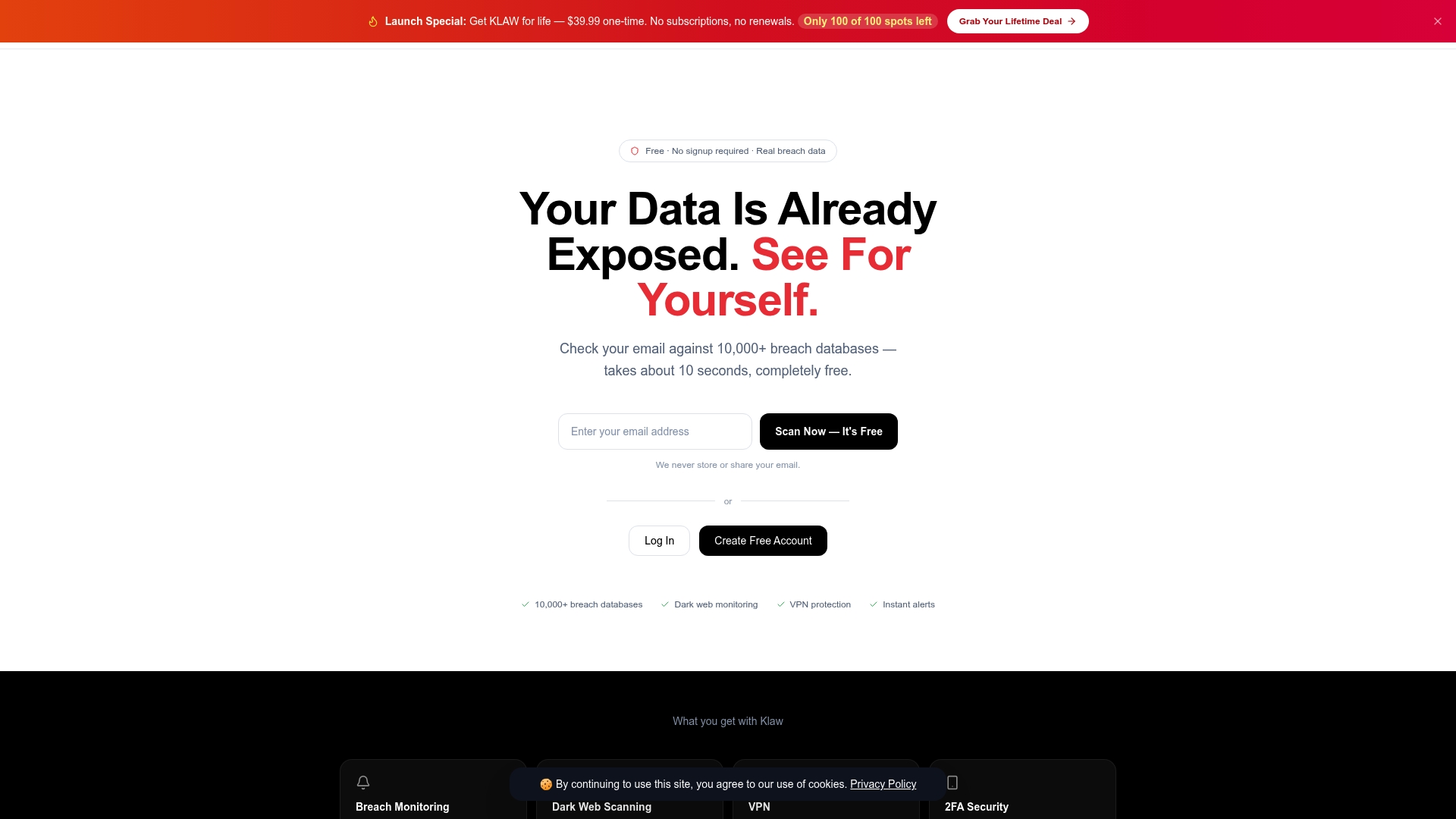
Klaw also offers configurable threat alert settings so you can tailor notifications to your specific risk profile, and a Security Trend Dashboard that gives you real-time visibility into your exposure. These tools pair directly with the response plan you build, turning early detection into faster containment. Small businesses that monitor proactively spend less time in crisis mode and more time running their operations.
FAQ
What is a data breach response plan?
A data breach response plan is a documented set of pre-approved procedures your business follows after unauthorized access to sensitive data is confirmed. It defines team roles, containment steps, communication templates, and legal notification timelines.
How quickly must a business notify regulators after a breach?
Regulatory notification is required within 72 hours of confirming a breach under frameworks like GDPR. The clock starts at confirmation, not at the end of your investigation.
What data types trigger mandatory breach notifications?
Breaches involving PII, PHI, or financial account numbers trigger specific notification obligations under laws including HIPAA, state breach notification statutes, and the Gramm-Leach-Bliley Act.
How often should a small business test its incident response plan?
Annual tabletop exercises are the minimum standard. After any real incident, conduct an immediate post-incident review and update the plan before the next exercise cycle.
What is the biggest mistake small businesses make in breach response?
The most common failure is waiting until after a breach to develop an incident response plan. Without a pre-approved plan, critical early hours are lost to internal debate instead of containment.