Managing ongoing identity and breach monitoring without constant manual checks or juggling multiple tools remains unnecessarily time consuming for most people. Many services restrict key features behind expensive recurring subscriptions, limit insurance coverage by geography, or force users through upsell-heavy onboarding that obscures what protections are actually included. This comparison shows how three identity and breach monitoring platforms differ in price model, bundled insurance, and recovery support so you can pick one with transparent coverage and minimal hidden fees.
Table of Contents
KLAW
Quick Snapshot
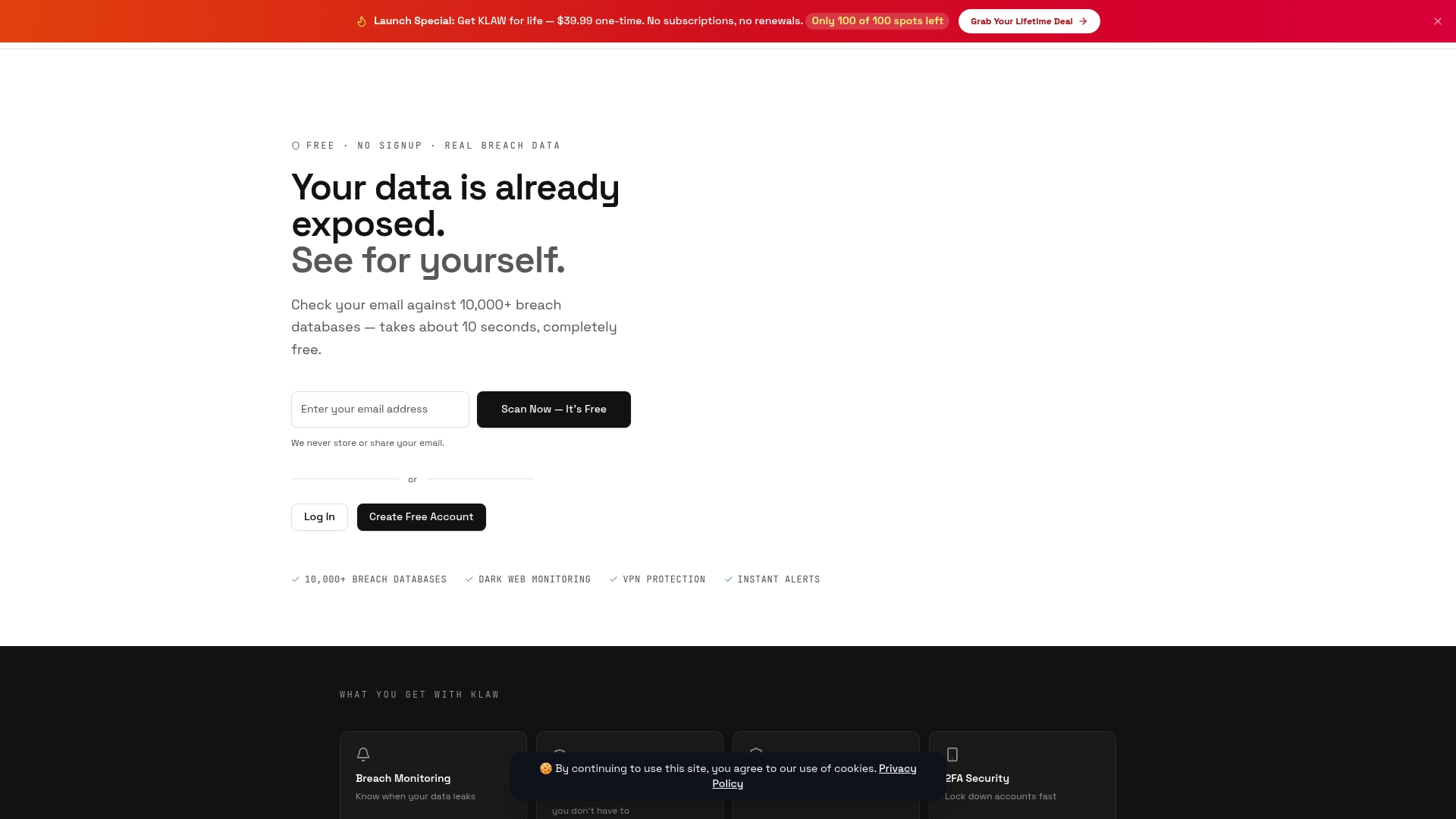
KLAW's marketing materials state it can scan emails against over 10,000 breach databases for free, a claim worth verifying independently. The product pairs that reach with lifetime access via a single one-time payment rather than a subscription.
Primary Capabilities
KLAW delivers continuous breach monitoring and unlimited email scans, plus dark web scanning that checks for exposed credentials. The service includes VPN protection, two-factor authentication support, automated breach alerts, and an emergency account locking tool for rapid containment.
KLAW also provides guided incident recovery workflows and data broker opt-out assistance, which reduces the manual work after exposure.
What Separates It
The company advertises lifetime access behind a one-time $39.99 payment, removing recurring billing for ongoing monitoring. That pricing approach shifts the cost model from monthly subscription math to a single purchase decision, which changes how individuals budget for long-term identity protection.
Strengths
- One-time payment. Buying lifetime access at $39.99 removes subscription renewals and simplifies long-term budgeting for personal identity protection.
- Quick initial check. The free email scan mentioned above lets you get immediate feedback on exposures before committing to the paid plan.
- Emergency account locking speeds containment when credentials show up in breach feeds, reducing the time a compromised account can be abused.
- Data broker opt-out assistance automates a tedious privacy task and reduces the effort required to shrink your public footprint.
- VPN plus monitoring. Combining privacy tools with ongoing breach alerts keeps browsing activity private while you track exposures.
One Weakness
- Limited independent review data is visible in the vendor materials, so external validation of coverage scope and long-term detection accuracy is sparse.
Best For
Individuals who want straightforward identity protection without monthly fees. Ideal if you prefer a single purchase, care about automated cleanup like broker opt-outs, and want built-in privacy tools such as VPN and 2FA support alongside monitoring.
Why This Pays Off
Automated data broker removals and guided recovery workflows reduce the hands-on time after a breach. Instead of piecing together several services, you get monitoring, containment tools, and cleanup assistance that lower the total hours you would otherwise spend recovering your identity.
Practical Example
You run the free scan, spot an exposed email, and trigger the emergency lock while upgrading to the lifetime plan. The service then automates follow-up tasks: continuous dark web checks, broker opt-outs, and step-by-step recovery guidance so you can move from detection to containment quickly.
Cost
One-time lifetime access: $39.99. KLAW advertises a free initial breach scan and no recurring subscription for ongoing monitoring. That single-fee model is the advertised tradeoff for a paid lifetime account.
Website: https://klawusa.org
ID Watchdog
At a Glance
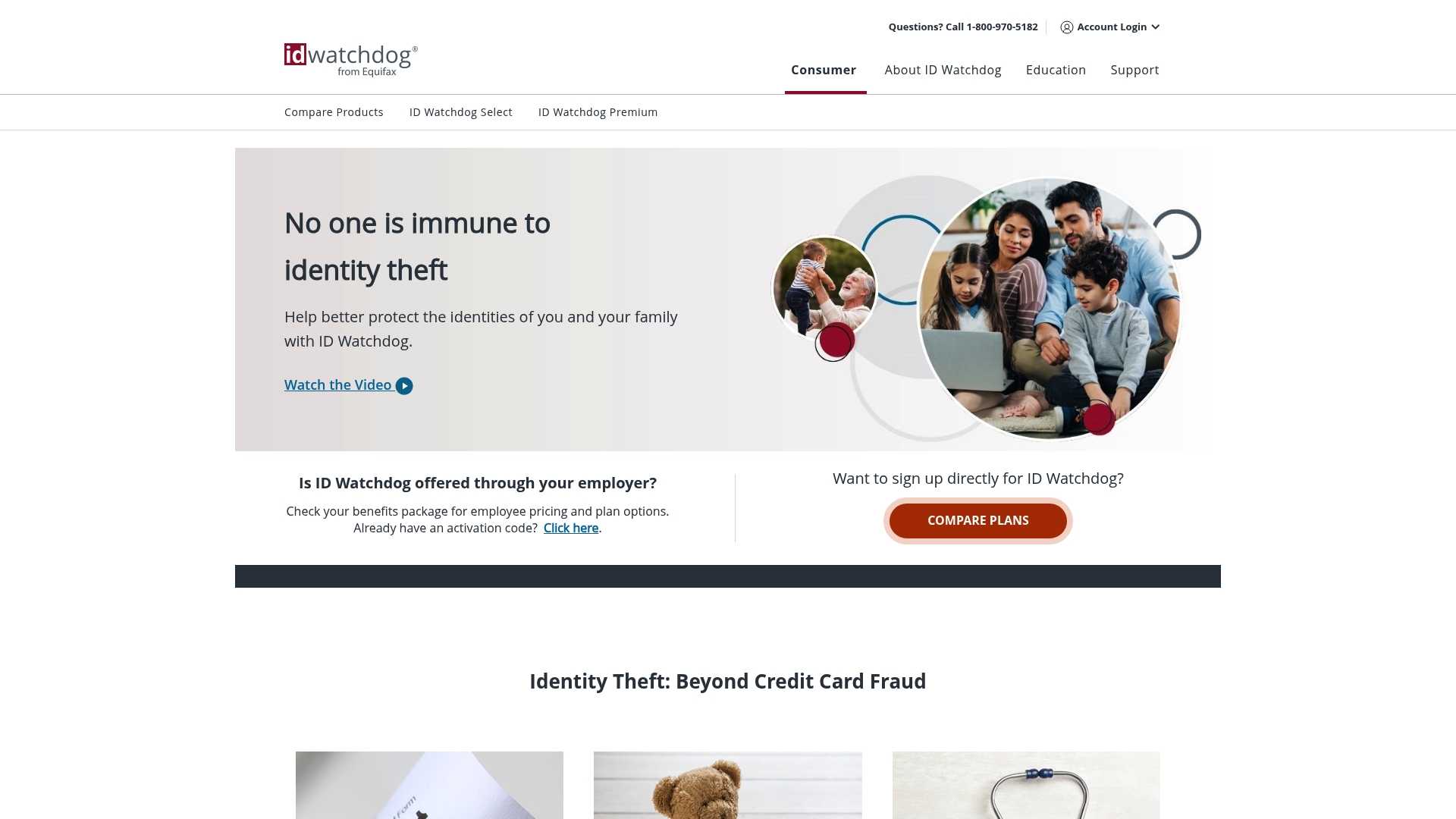
The vendor advertises up to $1 million identity theft insurance and round the clock resolution specialists as part of its service package. That positioning pairs identity restoration help with a family-focused feature set aimed at protecting minors.
Core Features
Credit report monitoring from multiple bureaus, dark web scans, and high risk transaction alerts form the monitoring backbone. Public records checks and USPS address change watches add layers that flag unusual identity activity.
Family protections include a child credit lock and social media alerts. A mobile app delivers on-the-go alerts and access to dedicated resolution specialists when theft is suspected.
Key Differentiator
The product stands out for its explicit family protections paired with the Equifax association. That family angle combines child credit controls, social monitoring, and a single family plan workflow that readers searching for parental protections will notice.
Pros
-
Wide monitoring coverage. The mix of bureau credit checks, dark web monitoring, public records, and address change alerts covers multiple exposure vectors for identity theft.
-
Family oriented protections. The child credit lock and social media alerts are useful for parents who want to stop account openings and credential exposure before damage occurs.
-
Hands on help. The company advertises dedicated resolution specialists and 24/7 support which simplifies recovery steps when identity problems arise.
-
Insurance backstop. The identity theft insurance figure above offers a financial recovery buffer for some victims while they work with resolution staff.
-
Mobile alerts. The app provides immediate notifications and access to help while you are travelling or away from a desktop.
Cons
-
Reported slow support. Recent user reports indicate long wait times and difficulty reaching live support, which undermines the promised 24/7 responsiveness.
-
Trust concerns tied to ownership. The vendor's association with Equifax is a recurring reason some reviewers decline the service, and that association affects trust for privacy conscious users.
-
Customer experience variability. Several complaints reference inconsistent resolution outcomes, suggesting service quality can vary by case.
When It May Not Fit
If you prioritize fastest possible live support, this may not be the best match because of reported hold times and slow response. Privacy first buyers who avoid providers tied to major credit bureaus will prefer independent vendors over the Equifax association.
Who It's For
Individuals and families who want a single subscription that bundles credit monitoring, child credit guards, and hands on restoration help. Parents seeking child credit controls and shared family alerts will find the feature mix appealing.
Real World Use Case
A family activates a family plan, turns on child credit locks for two minors, and sets social media monitoring for exposed credentials. When a high risk transaction alert appears, the family calls resolution staff and uses the app to follow the claim steps.
Website: https://idwatchdog.com
Coveron
At a Glance
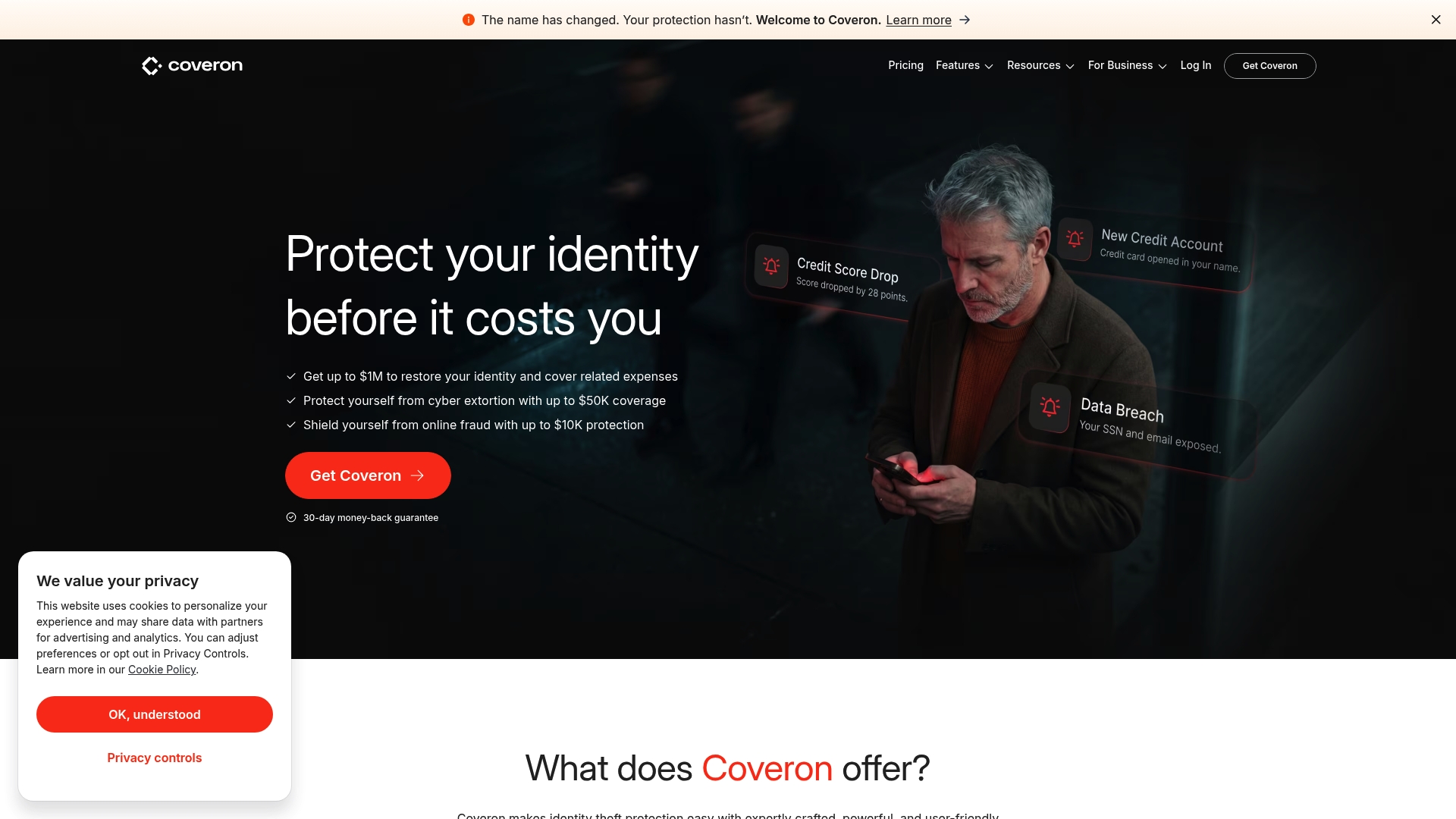
Coveron advertises up to $1 million in coverage, a headline number that frames its product as insurance-backed identity protection. The service combines dark web checks, credit alerts, recovery support, and optional insurance into a single consumer-focused offering.
Core Capabilities
- Dark web monitoring scans breached databases for exposed credentials and personal data and raises alerts when matches appear.
- Credit monitoring services track credit activity and send notifications about new accounts or inquiries tied to your identity.
- Identity theft recovery pairs case managers with insured customers to guide restorations and claims when fraud happens.
- Cyber extortion and online fraud insurance extend financial protection beyond basic monitoring.
Distinctive Angle
Coveron’s pitch centers on pairing continuous monitoring with an insurance safety net and recovery assistance. Rather than selling alerts only, the platform bundles response resources and an insurance ceiling so that detection leads directly to remediation and potential reimbursement.
Strengths
-
Peace of mind from automated monitoring. Continuous scans reduce the time you spend manually checking whether credentials or data show up where they should not.
-
Supportive chat assistance speeds setup and helps nontechnical users activate monitoring and insurance options without long hold times.
-
The combination of real-time alerts and recovery services means you have a single place to report suspicious activity and begin remediation.
-
Simple onboarding and a consumer-friendly dashboard make daily use straightforward for people who want one app to manage identity and cyber risk.
-
The inclusion of insurance and fraud coverage gives a tangible financial backstop when incidents occur, complementing alerts with direct relief.
Weaknesses
-
The multi-service setup is sometimes confusing, especially when features are bundled with other Nord products and require extra clicks to configure.
-
The site promotes additional products, which creates upsell friction during onboarding and can obscure which protections are included in each plan.
-
Advanced features carry a learning curve. Users who want to fine-tune alerts or policy details may find the interface less intuitive than basic monitoring workflows.
When It May Not Fit
Coverage is limited geographically. Coveron is available only to residents of the United States and explicitly excludes New York and Washington states, which makes it unsuitable for anyone living outside those permitted jurisdictions.
Who Should Consider It
Individuals in the United States who want an integrated identity and cyber protection package with monitoring, recovery help, and insurance would find Coveron appealing. It fits people who prefer a guided setup and a single vendor for alerts and claims.
Real World Example
A customer selects the Silver plan, enables dark web and credit monitoring, and starts receiving immediate alerts about suspicious activity. If identity theft occurs, they work with a recovery specialist and can open a claim using that $1 million figure as the policy cap.
Pricing
The vendor lists plans starting at about $0.99/month for very basic coverage and going up to over $31.99/month for premium tiers. Plans are offered monthly, annually, and multi-year with discounted rates for longer commitments.
Website: https://nordprotect.com
Comparing Identity Protection Services
When selecting an identity protection service, key dynamics such as cost structure, feature coverage, implementation convenience, and specific focused benefits often guide decision-making. Let’s evaluate three prominent options—KLAW, ID Watchdog, and Coveron—through these lenses.
Cost Structures and Long-term Value
KLAW offers a single one-time fee of $39.99 for lifetime access, an arrangement that eliminates recurring costs, simplifying long-term budgeting significantly. In contrast, ID Watchdog and Coveron operate on subscription models with prices ranging up to $31.99/month. While these latter plans involve higher ongoing expenses, they include additional features like identity theft insurance and personalized restoration support, possibly justifying the difference for users prioritizing such backstops.
Extent of Parental Protections
For families, ID Watchdog provides standout options such as child credit locks and social media monitoring, tailoring this plan specifically for parents monitoring minors’ identities. KLAW, while strong in overall capabilities, focuses primarily on individual protections and lacks explicit child-oriented benefits. Families thus might find ID Watchdog aligns better with their broader protection goals.
Geographic Availability and Usability
Coveron distinguishes itself with usability features like a simplified setup process and integration of monitoring with user-friendly dashboards, easing engagement for nontechnical users. However, its availability is geographically limited to certain areas within the United States, excluding states like New York and Washington, whereas KLAW and ID Watchdog offer accessibility without such constraints.
Best Fit Scenarios
- For personal identity protection without ongoing subscription costs and benefiting from streamlined workflows, KLAW is a fitting choice.
- For families requiring dedicated protections for children paired with responsive restoration help, ID Watchdog provides unique coverage.
- For users seeking bundled monitoring alongside recovery support and insurance coverage, Coveron caters well.
Our Pick
For individuals prioritizing cost transparency, enduring coverage, and integrated recovery tools, KLAW emerges as the solution. However, users who require expanded family safeguards or situated within restricted regions for other services might explore alternatives like ID Watchdog and Coveron accordingly.
Identity and Breach Monitoring Tools Comparison
Discover which tools provide robust features for identity protection and monitoring.
| Product | Primary Use Case | Key Differentiator | Best For | Pricing | Notable Limitation |
|---|---|---|---|---|---|
| KLAW | Email and dark web breach scans | Lifetime access with a one-time payment | Individuals preferring non-recurring fees | $39.99 one-time | Limited independent review data for coverage scope |
| ID Watchdog | Identity monitoring and child safety | Family-oriented protections | Parents seeking child credit protection | Not disclosed | Equifax association impacts trust for privacy-conscious users |
| Coveron | Integrated monitoring and insurance | Insurance-backed recovery services | US residents needing monitoring and reimbursement | From $0.99/month to $31.99/month | Limited geographical availability excludes certain states |
Discover a Strong Alternative for Identity Theft Protection With Klaw
When exploring omniwatch.com alternatives, the challenge often lies in finding identity protection that offers thorough breach monitoring without the burden of ongoing subscriptions. Klaw tackles these issues by enabling you to scan your emails against over 10,000 breach databases for free and providing continuous alerts and dark web scans with a one-time payment. This model removes surprise fees and helps you take control of your security budget.
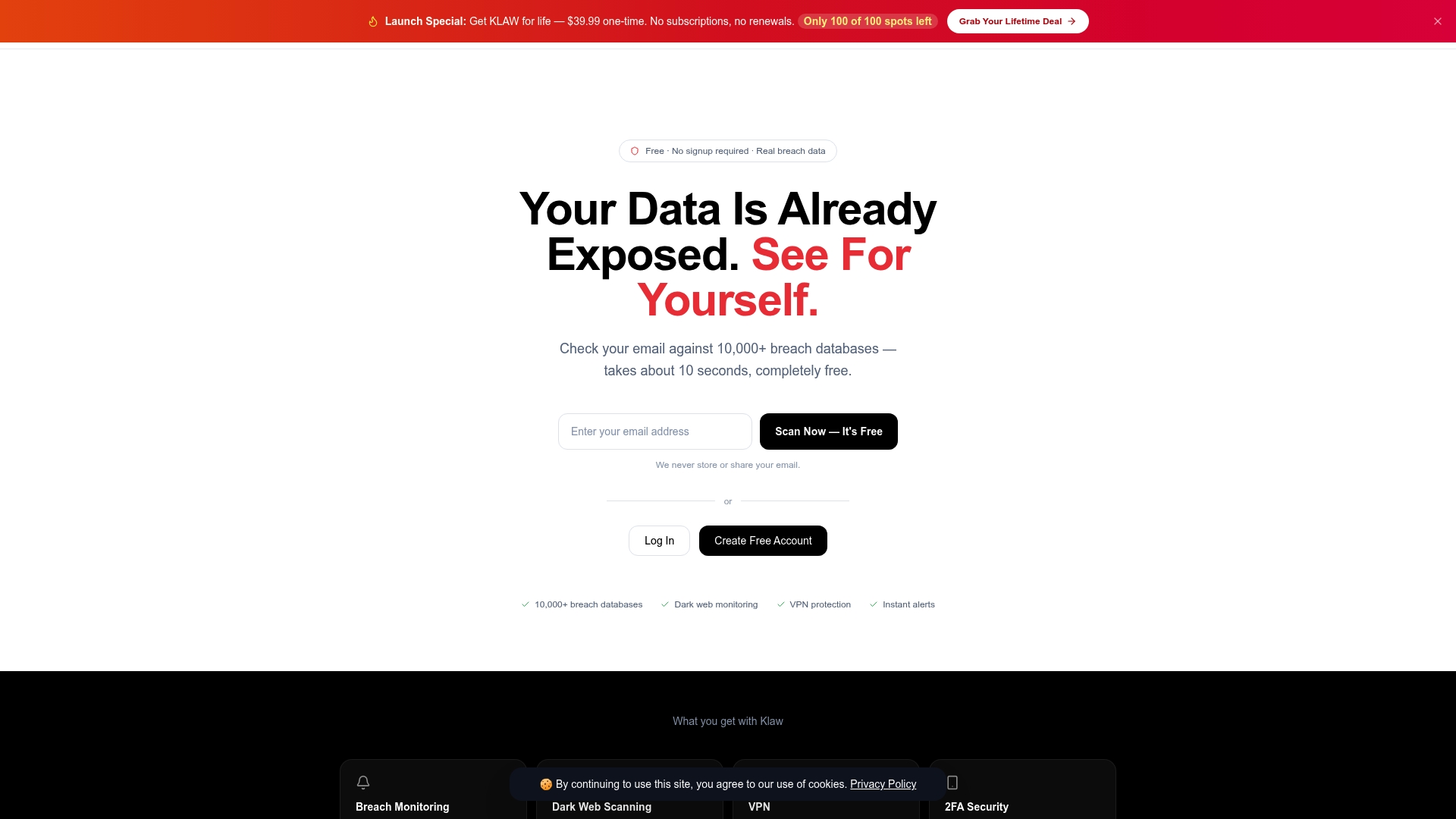
Take charge now by visiting Klaw's website to receive instant alerts, automated data broker removals, and VPN protection. Act today and immediately evaluate your exposure with a free scan that equips you with recovery guidance and real-time defense—all in one convenient platform.
Frequently Asked Questions
How does Klaw's pricing model compare to other identity protection services?
Klaw offers a unique one-time payment for lifetime access at $39.99, which removes the need for ongoing subscription renewals. This distinct pricing model shifts the budget considerations for personal identity protection from monthly expenses to a single purchase, making it easier to manage long-term costs.
What is the difference between Klaw and ID Watchdog's family-focused protections?
ID Watchdog excels in providing family-oriented features, such as a child credit lock and social media alerts, which are tailored for parental concerns about identity theft in minors. Klaw, on the other hand, offers automated data broker opt-out assistance, focusing on simplifying the cleanup process for individuals after a breach occurs.
Which platform offers better direct recovery assistance during identity theft incidents, Klaw or Coveron?
Coveron provides dedicated recovery support with case managers for insured customers, ensuring guided assistance during identity theft incidents. Klaw also offers guided incident recovery workflows but focuses more on providing tools for rapid containment and monitoring rather than dedicated personnel for recovery help.
Can I use Klaw if I only need basic identity breach monitoring?
Yes, Klaw is suitable for individuals looking for straightforward identity protection, as it provides unlimited email scans and dark web scanning without requiring a subscription. Starting with its free email scan allows users to quickly check for exposures before committing to the paid plan.
How does Klaw address emergency situations compared to its competitors?
Klaw includes an emergency account locking tool that allows users to quickly contain breaches when exposed credentials are detected. This feature is particularly beneficial compared to others, as it helps minimize the time a compromised account can be exploited.