
TL;DR:
- A data breach occurs when unauthorized parties access or steal your personal information, requiring immediate response to prevent damage. Verifying breach notifications through official websites and agencies is crucial before taking protective actions like credit freezes and account monitoring. Long-term vigilance over years ensures protection against persistent fraud risks resulting from stolen data.
A data breach is defined as any incident where unauthorized parties access, steal, or expose your personal information, and the steps you take in the first hours determine how much damage you can prevent. Social Security numbers, medical records, financial account credentials, and email addresses are the most commonly exposed data types. The Identity Theft Resource Center reports that breach notifications have become so frequent that many people experience "breach fatigue," dismissing alerts that require urgent action. What happens after a data breach follows a predictable pattern: verify the notice, secure your accounts, freeze your credit, and then commit to months of monitoring. Understanding that sequence, and executing it correctly, is the difference between a contained incident and years of financial fallout.
What happens after a data breach notification arrives
The first thing to recognize is that breach notifications themselves can be weaponized by criminals to deliver follow-up phishing attacks. A fraudulent notice that looks exactly like one from your bank or healthcare provider is a real and common threat. Before you click anything or call any number listed in an email, you need to confirm the breach is real.
Here is how to verify a breach notice is legitimate:
- Go directly to the company's official website by typing the URL into your browser. Do not use any link from the email.
- Check the Identity Theft Resource Center at idtheftcenter.org, which maintains a public database of confirmed breaches.
- Search for the company name alongside "data breach" on IdentityTheft.gov, the federal government's official resource for breach victims.
- Look for press releases or official statements on the company's newsroom page.
- Call the company's published customer service number to confirm the notice is genuine.
Pro Tip: Never click links in unsolicited breach notification emails. Even if the email looks legitimate, go directly to the company's website by typing the address yourself. Phishing emails mimicking breach notices are one of the most effective social engineering attacks in use today.
Once you confirm the breach is real, the data breach recovery process begins immediately. The type of data exposed determines which specific steps to prioritize first.
Immediate steps after confirming a data breach
The response to a data breach in the first 24 to 48 hours is the most consequential window you have. These steps are ordered by urgency.
-
Freeze your credit at all three major bureaus. Contact Equifax, Experian, and TransUnion individually to place a credit freeze. An Equifax credit freeze blocks any new credit accounts from being opened in your name, which is the most direct way to stop financial fraud before it starts.
-
Change your passwords immediately. Start with the breached account, then move to any account that shares the same password. Use a password manager like Bitwarden or 1Password to generate unique credentials for every account.
-
Enable multifactor authentication everywhere. Resetting passwords and enforcing MFA dramatically reduces the risk of unauthorized access even if your credentials were stolen. Prioritize email, banking, and healthcare portals.
-
Freeze your ChexSystems report. If your banking information was exposed, a ChexSystems freeze prevents criminals from opening new checking or savings accounts using your identity. This step is frequently overlooked.
-
Download and save paper copies of your medical records. If health data was part of the breach, having a current record of your actual treatments creates a baseline you can use to dispute fraudulent medical billing later.
-
Set up fraud alerts. A fraud alert at any one of the three major bureaus automatically notifies the others and requires lenders to verify your identity before extending new credit.
Pro Tip: A credit freeze is free and does not affect your credit score. Many people skip it because they assume it is complicated. It takes about 10 minutes per bureau online, and it is the single most effective fraud prevention tool available to individuals after a breach.
How long does the data breach recovery process take?
The data breach recovery process operates in distinct phases, and most people underestimate how long the risk window stays open. The first 24 hours focus on containment: identifying what was exposed, securing accounts, and beginning notifications. This is also when companies are scrambling to identify which legal jurisdictions apply to their notification obligations.
The 72-hour mark is significant for a different reason. Under GDPR Article 33, organizations must notify supervisory authorities within 72 hours of becoming aware of a breach. Critically, that clock starts at awareness, not at the completion of the investigation. This means companies may issue phased disclosures as they learn more, which is why you might receive multiple notices about the same incident.
The longer-term picture is sobering. Only 51% of breach-related costs appear in the first year, with the remaining costs accumulating over two to three years through lawsuits, regulatory fines, and fraud. For individuals, this translates directly: the fraud risk from a stolen Social Security number does not expire after a few months. It can resurface years later when a criminal finally uses the data.
| Phase | Timeframe | What to focus on |
|---|---|---|
| Immediate containment | 0 to 24 hours | Secure accounts, freeze credit, change passwords |
| Notification window | 24 to 72 hours | Confirm breach details, monitor for phishing follow-ups |
| Short-term monitoring | 1 to 6 months | Review credit reports, watch financial and medical statements |
| Long-term vigilance | 1 to 3 years | Annual credit checks, monitor for new account fraud |
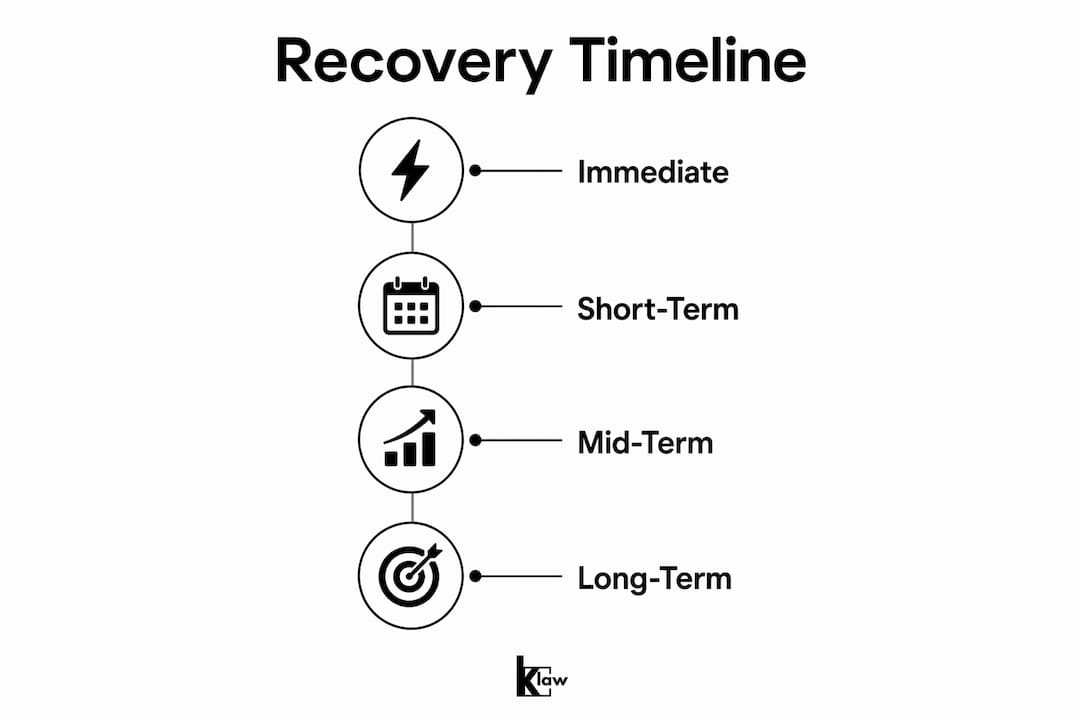
Understanding this timeline reframes how you think about breach response. It is not a one-time task. It is an ongoing practice.
What are the real data breach consequences for individuals?
Data breach consequences for individuals fall into three categories: financial fraud, identity theft, and medical record tampering. Each carries its own detection and recovery path.
Financial fraud is the most immediate risk. Criminals use stolen account credentials to drain existing accounts or use stolen card numbers for purchases within hours of a breach. Monitoring your bank and credit card statements daily in the weeks after a breach is not paranoia. It is the correct response.
Identity theft from stolen Social Security numbers is slower and more damaging. A criminal can use your SSN to file fraudulent tax returns, apply for government benefits, or open new lines of credit. The IRS Identity Protection PIN program is one concrete tool that blocks fraudulent tax filings using your SSN.
Medical identity theft is the least understood consequence. Monitoring medical bills and insurer reports closely after a health data breach is the only reliable way to catch fraudulent charges before they damage your insurance coverage or medical history. A fraudulent procedure billed under your name can alter your medical record in ways that affect future care.
- Set up account alerts with your bank and credit card providers for any transaction above a threshold you define.
- Request your free annual credit reports from all three bureaus through AnnualCreditReport.com and stagger them every four months.
- File a report with the FTC at IdentityTheft.gov if you discover actual fraud. This creates a legal record and generates a personalized recovery plan.
- Contact your health insurer directly if you see any medical service on your explanation of benefits that you did not receive.
The cumulative effect of these consequences is significant. Understanding how data breaches happen in the first place helps you recognize which of your accounts carry the highest risk.
How legal frameworks and company responses affect you
What you receive after a breach, and when, is governed by law. US states and GDPR have established notification laws with specific timelines, and failure to comply exposes companies to significant legal penalties. As a victim, this matters because it defines your rights.
| Framework | Notification timeline | What you should expect |
|---|---|---|
| GDPR (EU) | 72 hours to authorities, reasonable time to individuals | Written notice with breach scope and recommended actions |
| US state laws (varies) | 30 to 90 days depending on state | Written or electronic notice with type of data exposed |
| HIPAA (health data) | 60 days from discovery | Notice from covered entity with breach details and steps taken |
| Financial regulators | Varies by institution type | Notice plus offer of credit monitoring services |
Companies are legally required to notify affected individuals and regulators, and most will offer free credit monitoring services as part of their breach response. Accept these offers, but do not treat them as sufficient protection on their own. Credit monitoring tells you after fraud has occurred. A credit freeze prevents it from happening.
You also have the right to know what specific data was exposed. If the breach notice is vague, contact the company directly and ask. A clear answer helps you prioritize which accounts and records to protect first. For a deeper look at how companies communicate breach details, the data breach disclosure guide covers what organizations are required to tell you.
Key takeaways
Recovering from a data breach requires immediate action on credit freezes and account security, followed by sustained monitoring for up to three years because fraud risks accumulate long after the initial incident.
| Point | Details |
|---|---|
| Verify before you act | Confirm breach notices are real by visiting the company's official site directly, never via email links. |
| Freeze credit immediately | Place freezes at Equifax, Experian, TransUnion, and ChexSystems to block new fraudulent accounts. |
| Enable MFA on all accounts | Multifactor authentication stops unauthorized access even when passwords are already stolen. |
| Monitor for years, not weeks | Only 51% of breach costs appear in year one; fraud risks from stolen SSNs can surface years later. |
| Know your legal rights | US state laws and GDPR require companies to notify you with specific details about what was exposed. |
What I've learned from watching people handle breaches wrong
The most common mistake I see is treating a breach notification like a piece of junk mail. People read it, feel vaguely uneasy, and do nothing because the steps feel overwhelming or because they assume the company will handle it. The company will not handle it for you. Their legal obligation ends at notification.
The second mistake is assuming that one round of password changes is enough. Credentials stolen in a breach often sit on dark web marketplaces for months before anyone uses them. The criminals who buy that data are patient. Your vigilance needs to outlast their patience.
Freezing credit is the step I wish more people took seriously on day one. It is free, reversible, and takes minutes. Yet most people skip it because it sounds complicated or because they worry it will affect their credit score. It does not affect your score at all. It just stops new accounts from being opened without your explicit permission.
The hardest truth about breach recovery is that it is genuinely long-term work. The breach recovery steps that matter most are the ones you keep doing six months after the initial panic fades. Set calendar reminders. Check your credit reports on a schedule. Do not assume silence means safety.
— Lucky
How Klaw helps you stay ahead of breach consequences
After a confirmed breach, the gap between knowing your data was exposed and knowing where it ended up is where the real risk lives. Klaw closes that gap with tools built specifically for individuals who want more than a one-time notification.
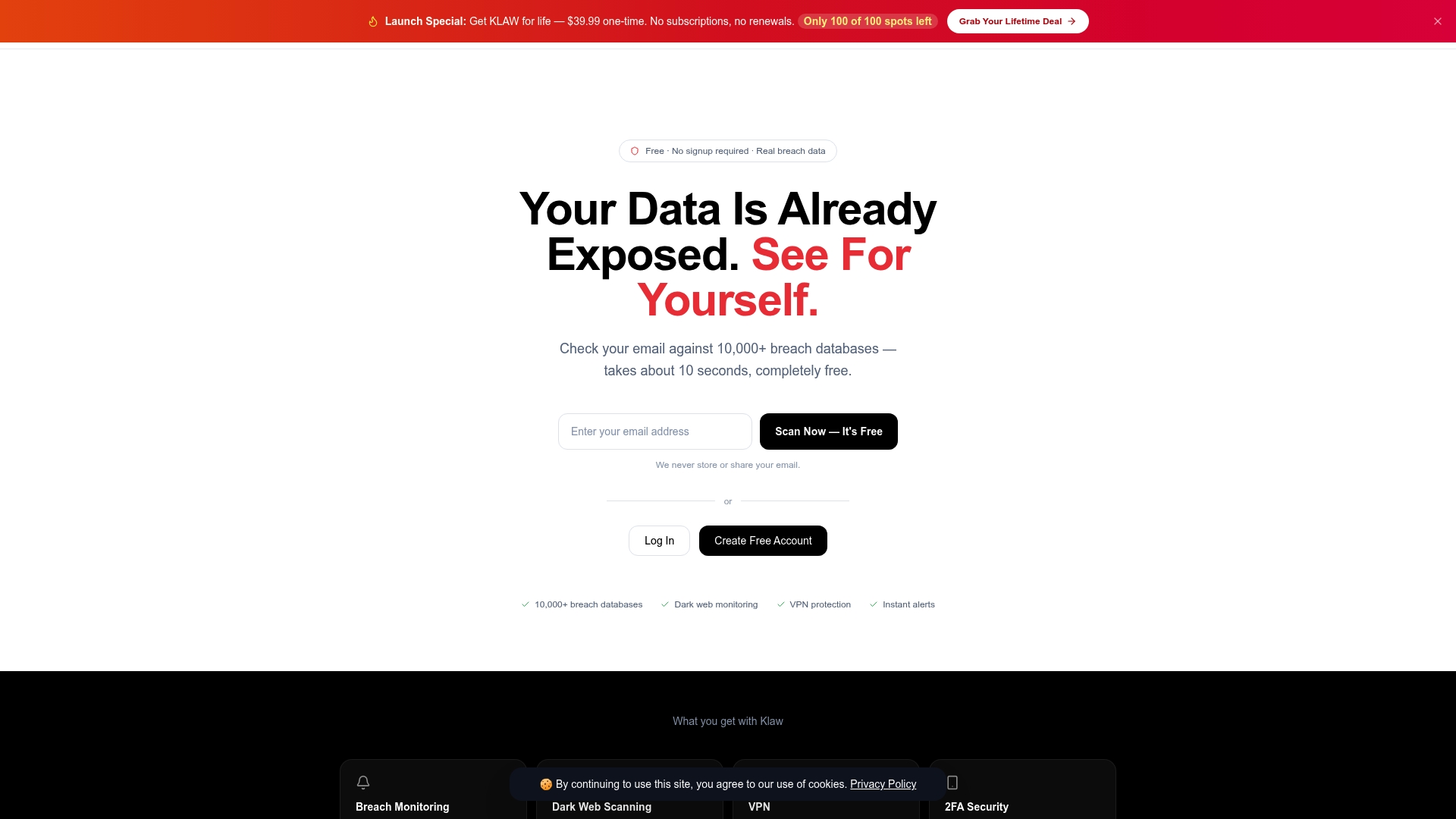
Klaw's dark web monitoring scans over 10,000 breach databases and alerts you in real time when your personal information appears in new exposures. The free scan lets you check your current exposure status immediately, with no subscription required to get started. Combined with automated data broker removals and VPN access, Klaw gives you a continuous layer of protection that works alongside the manual steps like credit freezes and password changes. Recovery is not a single event. Klaw treats it as the ongoing process it actually is.
FAQ
How do I know if a breach notification is real?
Go directly to the company's official website by typing the URL yourself, and check the Identity Theft Resource Center at idtheftcenter.org for confirmed breach listings. Never click links in unsolicited emails claiming to be breach notices.
How long does it take to recover from a data breach?
Full recovery can take one to three years because fraud risks from stolen data, especially Social Security numbers, accumulate slowly. Only 51% of breach-related costs appear in the first year, so sustained monitoring is required well beyond the initial incident.
What is the first thing to do after a data breach?
Freeze your credit at Equifax, Experian, and TransUnion immediately. This single step prevents criminals from opening new accounts in your name and costs nothing to set up.
Will the company fix everything for me after a breach?
No. Companies are legally required to notify you and often offer free credit monitoring, but their obligation ends there. Protecting your accounts, freezing credit, and monitoring for fraud are your responsibility.
What data breach consequences should I watch for long-term?
Watch for fraudulent tax returns filed with your SSN, new credit accounts you did not open, and unfamiliar charges on medical explanation-of-benefits statements. These are the three most common long-term fraud patterns following a personal data breach.