
TL;DR:
- A business data breach involves unauthorized or accidental access, disclosure, or loss of sensitive information. The number of breaches increased by 79% in 2025, emphasizing the growing threat. Prevention and a solid response plan are crucial to minimizing damage and safeguarding company data.
A business data breach is defined as any unauthorized or accidental access, disclosure, alteration, or loss of sensitive company data that compromises its confidentiality, integrity, or availability. The term "data breach" is the recognized industry standard, though you may also hear it called a security incident or data security event. Understanding what is a business data breach is not optional for owners and managers. The Identity Theft Resource Center recorded 3,322 breach incidents in 2025, a 79% increase over five years. That number tells you the threat is accelerating, not stabilizing.
What is a business data breach, exactly?
A business data breach occurs when protected company information is accessed or exposed without authorization. The breach does not need to involve a hacker. Accidental email forwards, misconfigured cloud storage, and lost laptops all qualify. What matters is whether confidentiality, integrity, or availability of data was compromised.

Three core concepts define every breach. Confidentiality means data was seen by someone who should not have seen it. Integrity means data was altered or destroyed without permission. Availability means data was made inaccessible, often through ransomware or deletion. A single incident can hit all three at once.
One distinction worth knowing: a data breach versus a data leak is not the same thing. A leak is accidental exposure where access may not be confirmed. A breach confirms unauthorized access occurred. Leaks can escalate to breaches if evidence of access surfaces. Treating every leak as a potential breach is the safer default for any business.
Not every breach triggers a legal notification requirement. Notification obligations depend on the type of data exposed, the number of individuals affected, and the jurisdiction where your business operates. Breaches involving personal health records, financial data, or Social Security numbers carry the strictest reporting rules.
What types of data breaches can businesses face?
Businesses face three primary breach categories, and each one demands a different response.
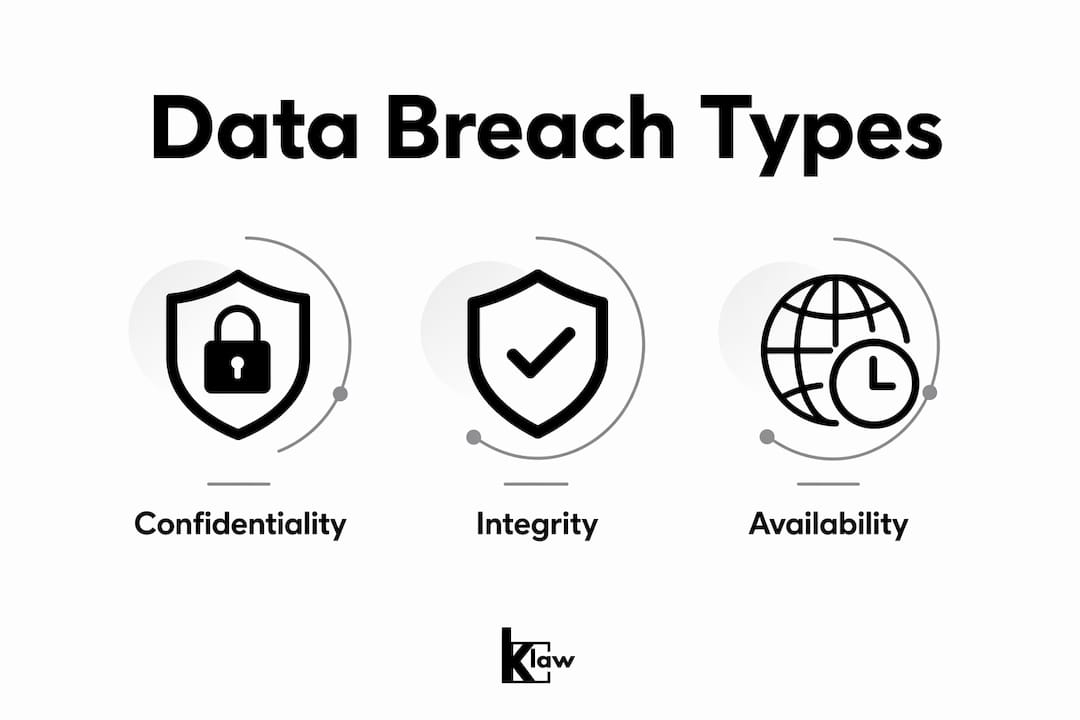
Confidentiality breaches are the most common. A hacker steals a customer database. An employee emails a spreadsheet to the wrong recipient. A contractor copies files before leaving. In every case, data reaches someone unauthorized to see it.
Integrity breaches are less visible but equally damaging. An attacker modifies financial records, alters inventory data, or changes user account permissions. The business may not notice for weeks. By then, decisions made on corrupted data have already caused harm.
Availability breaches are the most disruptive operationally. Ransomware locks your files until you pay. A denial-of-service attack shuts down your customer portal. These breaches do not always steal data, but they can halt operations entirely.
| Breach Type | Example Scenario | Primary Business Impact |
|---|---|---|
| Confidentiality | Customer records stolen via phishing | Regulatory fines, trust loss |
| Integrity | Financial data altered by insider | Flawed decisions, legal liability |
| Availability | Ransomware locks company systems | Downtime, revenue loss |
Pro Tip: Map your most sensitive data assets first. Knowing where your crown jewels live tells you which breach type poses the greatest risk to your specific business.
What causes business data breaches?
External attacks account for the majority of business data breaches. Phishing emails trick employees into surrendering credentials. Hackers exploit unpatched software vulnerabilities. Supply chain compromises target third-party vendors with access to your systems. Understanding how data breaches happen reveals that most attacks follow a predictable path: initial access, privilege escalation, lateral movement, data discovery, and exfiltration. Interrupting any stage can stop the breach.
Insider threats are the second major cause. Negligent employees click malicious links or misconfigure cloud storage. Malicious insiders copy data before resigning. Both are harder to detect than external attacks because the access itself looks legitimate.
Cloud environments introduce specific risks. Misconfigured storage buckets, overly permissive access controls, and weak API security all create exposure. The increasing sophistication of cyberattacks means these vulnerabilities are found and exploited faster than most IT teams can patch them.
Key risk factors every business owner must monitor:
- Unpatched software and operating systems
- Weak or reused employee passwords
- Lack of multi-factor authentication (MFA)
- Third-party vendor access without proper controls
- Employees using personal devices on company networks
- No employee security awareness training
Pro Tip: Run a quarterly access audit. Remove permissions for employees who changed roles or left the company. Stale access is one of the most overlooked breach entry points.
What is the impact of a business data breach?
The financial damage from a breach is severe. The average global breach cost is approximately $4.88 million, and recovery can take close to a year. That figure includes forensic investigation, legal fees, regulatory fines, customer notification, and lost business. For small and mid-size businesses, a single breach can be existential.
Customer trust erodes fast. Research shows data breaches reduce customer engagement by an average of 4.65%, with insider-caused breaches producing the steepest drop. That decline in engagement translates directly to lost revenue and longer sales cycles.
Regulatory exposure adds another layer of cost. GDPR fines can reach 4% of global annual revenue. HIPAA penalties run up to $1.9 million per violation category per year. State-level laws like the California Consumer Privacy Act add further liability. Legal counsel is not optional after a breach.
The reputational damage compounds over time. News coverage, social media backlash, and negative reviews create a long tail of brand damage that financial settlements cannot fully repair. Businesses in healthcare, finance, and retail face the sharpest scrutiny because their customer data is the most sensitive.
Key business impacts to prepare for:
- Direct financial losses from fraud and theft
- Regulatory fines and legal defense costs
- Operational downtime and lost productivity
- Customer churn and reduced lifetime value
- Increased cyber insurance premiums post-breach
How should businesses respond when a data breach occurs?
A data breach response plan is a documented, pre-approved set of procedures that guides your team from detection through recovery. A response plan aligned with NIST and ISO 27001 can reduce breach costs by millions. Yet 77% of organizations still lack a consistent incident response plan, which means most businesses are improvising during the worst possible moment.
The core response lifecycle follows seven stages: preparation, detection, containment, investigation, notification, recovery, and post-incident review. Each stage has defined owners, timelines, and documentation requirements. Skipping stages, especially documentation, creates legal exposure later.
Critical first steps when a breach is detected:
- Isolate affected systems to stop further data loss
- Preserve logs and evidence before any remediation
- Notify your incident response team and legal counsel immediately
- Assess the scope: what data was accessed, by whom, and for how long
- Determine notification obligations based on data type and jurisdiction
Notification timing is a legal and strategic decision. Premature public disclosure risks spreading misinformation before you have accurate facts. Legal scrutiny favors well-documented, time-stamped incident records over rushed announcements. Balance your obligation to notify affected parties with the need to investigate accurately first.
Privacy and security teams must work together during response. Privacy experts recommend close collaboration between these two functions because personal data breaches carry distinct regulatory requirements beyond standard IT security protocols. Breach notification laws vary by jurisdiction and data type, so legal counsel must be part of your response team from day one.
Pro Tip: Run a tabletop exercise before a real breach happens. Simulated breach scenarios, which typically take 2–4 weeks to implement fully, expose gaps in your plan while the stakes are low.
What are effective strategies to prevent business data breaches?
Prevention starts with technical controls that reduce your attack surface. Multi-factor authentication (MFA) blocks the majority of credential-based attacks. Data encryption protects files even if an attacker gains access. Endpoint security tools monitor devices for suspicious behavior in real time.
Policy and training close the human gap. Employees are the most common entry point for phishing and social engineering attacks. Regular security awareness training, clear acceptable-use policies, and simulated phishing tests build a workforce that recognizes threats before clicking.
| Prevention Method | Primary Threat Addressed | Implementation Complexity |
|---|---|---|
| Multi-factor authentication | Credential theft | Low |
| Data encryption | Unauthorized data access | Medium |
| Employee security training | Phishing, social engineering | Low |
| Vulnerability assessments | Unpatched software exploits | Medium |
| Third-party vendor audits | Supply chain compromise | High |
Top prevention practices for business owners:
- Deploy MFA across all business accounts and remote access points
- Encrypt sensitive data at rest and in transit
- Conduct annual penetration testing and vulnerability scans
- Establish a formal vendor security review process
- Implement least-privilege access so employees only reach data they need
- Use dark web monitoring to detect exposed credentials before attackers exploit them
Privacy-first development tools also matter for businesses with in-house software teams. Building privacy controls into applications from the start is far cheaper than retrofitting them after a breach. Your post-breach recovery steps become significantly less painful when prevention measures were already in place.
Key takeaways
A business data breach is a preventable, manageable risk when you understand its causes, costs, and the response steps that limit damage.
| Point | Details |
|---|---|
| Breach definition | Any unauthorized access, disclosure, or loss of sensitive company data qualifies as a breach. |
| Financial stakes | The average breach costs $4.88 million and can disrupt operations for close to a year. |
| Response planning | 77% of organizations lack a consistent plan, making preparation a clear competitive advantage. |
| Prevention priority | MFA, encryption, and employee training address the three most common breach entry points. |
| Notification obligations | Breach reporting rules vary by jurisdiction and data type, requiring legal counsel from day one. |
The breach risk most businesses underestimate
Most business owners I talk to think about data breaches as a technology problem. They buy a firewall, install antivirus software, and consider the job done. That framing is the single most dangerous mistake I see.
The breaches that actually destroy businesses are not stopped by technology alone. They happen because an employee reused a password, because a vendor had excessive access, or because no one ran a tabletop exercise before the real incident hit. The 2025 breach data showing a 79% increase over five years is not a technology failure story. It is a preparedness failure story.
What I have found actually works is treating breach response like a fire drill. You do not wait for smoke to read the evacuation plan. You practice it until the steps are automatic. Businesses that invest in documented response plans, cross-functional training, and continuous monitoring consistently recover faster and spend less when breaches do occur.
The other thing I would push back on is the idea that small businesses are not targets. Attackers specifically target smaller companies because they assume the defenses are weaker. That assumption is often correct. Building a security culture is not about budget size. It is about consistency, awareness, and making breach response part of how your business operates every day.
— Lucky
How Klaw helps businesses stay ahead of breaches
Knowing what a business data breach is only gets you so far. Acting on that knowledge before a breach happens is what separates businesses that survive incidents from those that do not.
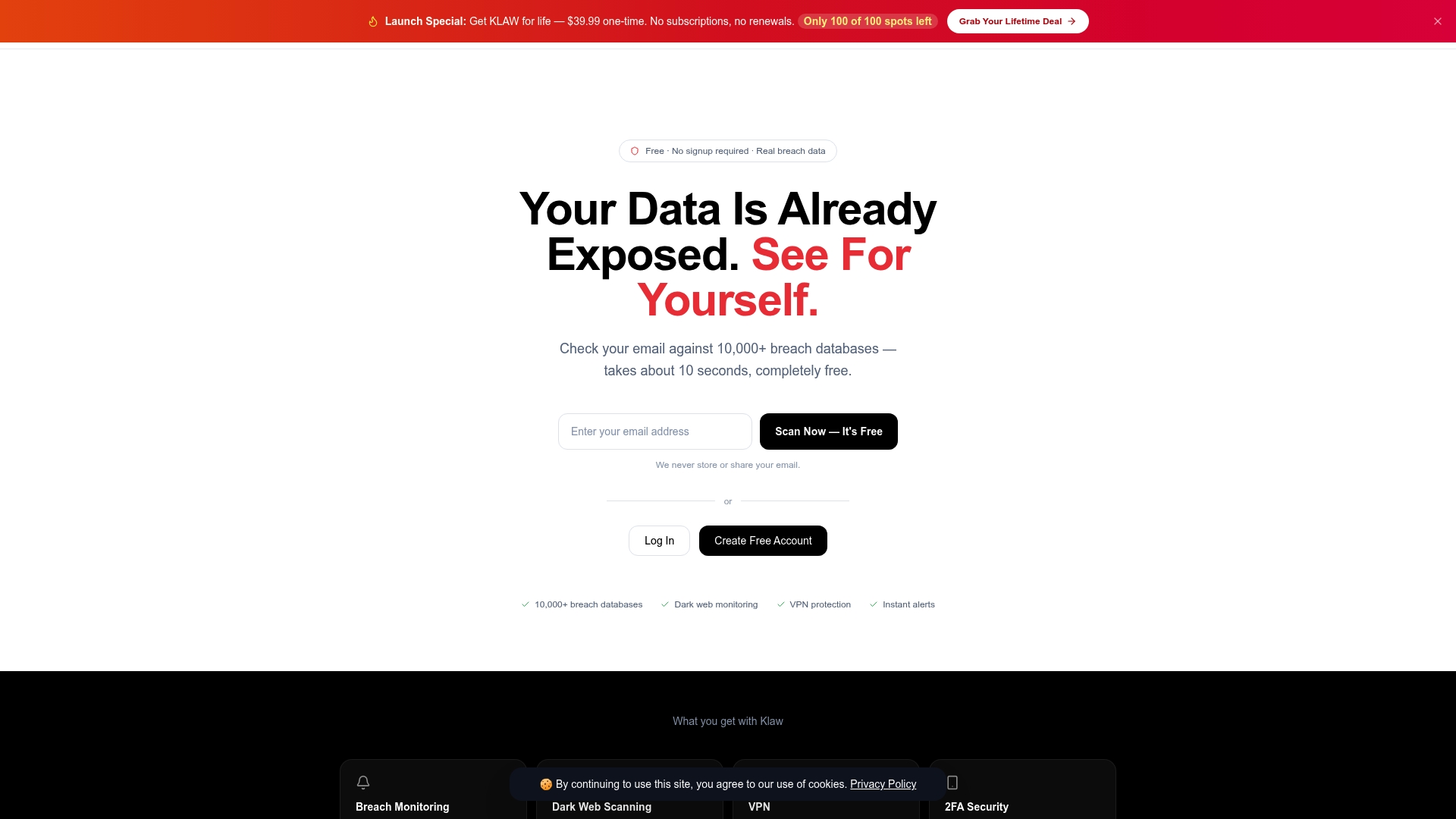
Klaw gives business owners real-time visibility into whether their company data is already circulating on the dark web. Klaw's dark web monitoring alerts scan against over 10,000 breach databases and notify you the moment exposed credentials or sensitive data appear. For teams managing remote access, Klaw's VPN management tool adds an encrypted layer of protection across every connection. No hidden fees, no complex setup. Just the early warning system your business needs to act before attackers do.
FAQ
What is the standard definition of a data breach?
A data breach is defined as any unauthorized or accidental access, disclosure, alteration, or destruction of protected data. The breach compromises at least one of three properties: confidentiality, integrity, or availability.
How is a data breach different from a data leak?
A data leak is accidental exposure where unauthorized access is not confirmed. A breach confirms that unauthorized access occurred. Leaks can escalate to breaches if evidence of access is discovered.
What does a data breach response plan include?
A data breach response plan covers preparation, detection, containment, investigation, notification, recovery, and post-incident review. Plans aligned with NIST and ISO 27001 frameworks have been shown to significantly reduce breach costs.
How long does it take to recover from a business data breach?
Recovery from a breach can take close to a year, depending on the scope of data affected and the strength of the response plan already in place. Businesses with documented response plans recover faster and at lower cost.
What are the most effective ways to prevent a data breach?
Multi-factor authentication, data encryption, and regular employee security training address the three most common breach entry points. Combining these technical controls with continuous dark web monitoring gives businesses the strongest preventive posture.