
TL;DR:
- Stolen data is processed into market-ready logs with session tokens and metadata before sale. It is sold through structured dark web marketplaces and quick-to-respond Telegram channels, targeting different buyer types. Early detection, such as breach monitoring services, remains the best defense against rapid underground data trafficking.
Stolen data gets sold through a professionalized underground economy where cybercriminals process raw breach data into market-ready products within hours of theft. The term used in security research is "credential trafficking," and it operates with the structure of a legitimate marketplace. Understanding how stolen data gets sold is no longer just useful for security teams. If you have an email address, a bank account, or a social media profile, your data has a price tag in this market.
What types of stolen data are sold and how are they packaged?
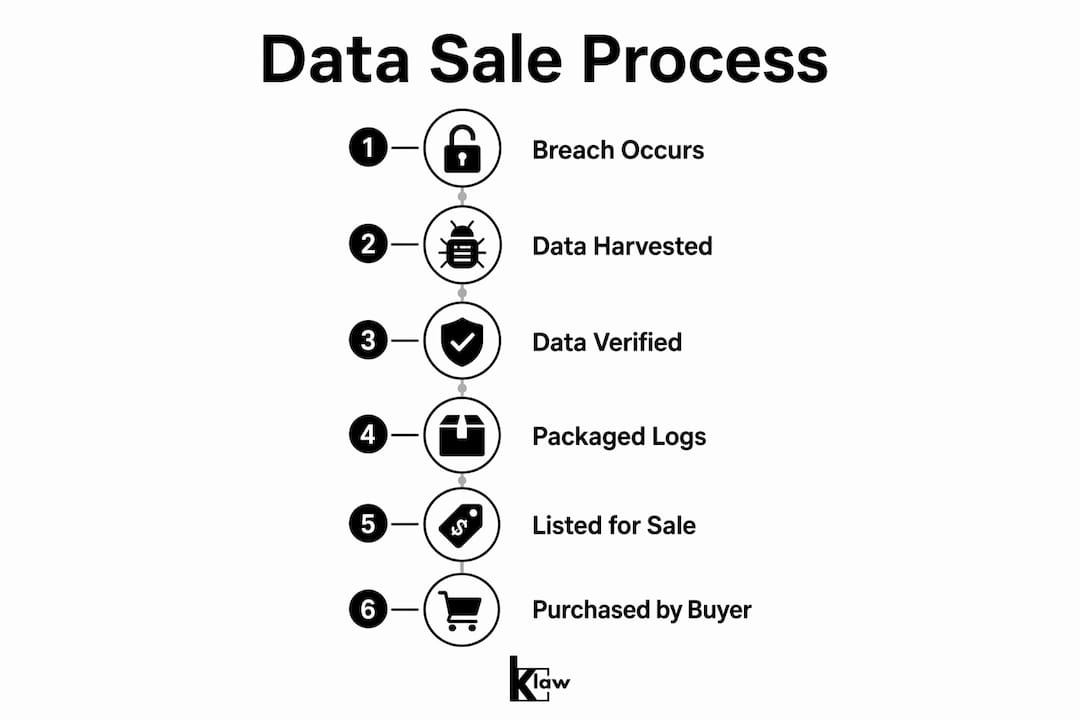
Stolen data is almost never sold in its raw form. Cybercriminals process it into structured logs containing passwords, session tokens, and contextual metadata before listing it for sale. That packaging step is what makes the data useful to buyers and what drives its price up.
The most common data types sold underground fall into four categories:
- Raw credentials: Usernames and passwords scraped from phishing pages or keyloggers. These are the lowest-value items and typically sold in bulk.
- Infostealer logs: Files harvested by malware like RedLine or Raccoon Stealer. Each log contains browser-saved passwords, autofill data, cookies, and system fingerprints from a single infected device.
- Combolists: Massive text files combining credentials from multiple breaches. These are used for credential stuffing attacks where bots test millions of username/password pairs across popular sites.
- Session cookies: The most dangerous category. A stolen session cookie lets an attacker impersonate an already-authenticated user without ever needing the password.
The packaging process is what separates amateur theft from professional trafficking. Infostealer malware automatically organizes harvested data by website, account type, and geographic region. A buyer searching for U.S. banking credentials or corporate VPN logins can filter results the same way you filter products on Amazon.
Pro Tip: If your device has been infected with infostealer malware, changing your password alone is not enough. The session cookie tied to your active login may already be in a criminal's hands.

Value increases sharply with verification status. Sellers use automated tools to test credentials before listing them, removing dead accounts and flagging active ones for premium pricing.
Where is stolen data sold in the underground economy?
The stolen data black market operates across two main environments: dark web marketplaces and Telegram channels. Each serves a different buyer profile and price point.
Dark web marketplaces like Russian Market operate as structured storefronts. They offer search filters, buyer reviews, and escrow services that hold payment until the buyer confirms the data works. That dispute resolution system mirrors legitimate e-commerce. It builds trust between anonymous criminals and keeps the market functioning.
Telegram channels have become the faster, lower-friction alternative. Sellers post sample logs publicly to attract buyers, then move transactions to private chats. The speed is the draw. A seller can post freshly harvested logs and complete a sale within minutes, no marketplace listing required.
The market operates on a clear tier structure:
- Free previews: Sellers post a small sample of stolen records publicly to prove quality. These previews often include real email addresses and partial passwords.
- Standard bulk access: Buyers purchase large volumes of unfiltered logs at low per-record prices. This tier targets automated attackers running credential stuffing campaigns.
- VIP filtered access: Curated corporate logs sold at premium prices. These are pre-screened for high-value targets like enterprise VPN credentials, admin accounts, and financial platforms.
| Sales channel | Speed | Price range | Buyer type |
|---|---|---|---|
| Dark web marketplace | Hours to days | $0.05 to $2,000+ | Ransomware operators, IABs |
| Telegram channel | Minutes to hours | $0.05 to $500 | Fraud operators, bulk buyers |
| Private broker | Days to weeks | $2,700 to $113,000+ | Advanced threat actors |
Initial Access Brokers, known as IABs, sit at the top of this supply chain. They buy verified credentials, confirm active network access, and resell that access to ransomware groups. The IAB listing price averages around $2,700, but the ransomware attack that follows can cost the victim millions.
How much is stolen data worth?
Price is set by three factors: freshness, verification status, and the value of the account being accessed. Bulk indiscriminate logs sell for as little as $0.05 to $0.25 each. That low price reflects high volume and low certainty. Buyers expect most of those credentials to be stale or already changed.
Curated corporate logs command $200 to $2,000 or more per record. The price reflects the work the seller put into filtering and verifying the data, plus the higher potential payout for the buyer. Domain administrator credentials, which give an attacker full control over a corporate network, can exceed $113,000 in private broker deals. That price makes sense when the access enables a ransomware attack worth tens of millions.
Session cookies command a separate premium because they bypass authentication entirely. A cookie tied to an active banking or corporate session is worth far more than a static password because it works immediately, without triggering login alerts.
Pro Tip: Stale data does not disappear from the market. Unsold credentials get bundled into combo lists and resold repeatedly for pennies per record. Your compromised password from a 2022 breach may still be circulating today.
The economic logic is simple. Criminals invest in verification tools because verified data sells faster and at higher prices. Unverified bulk data gets offloaded cheaply to automated attackers who will test millions of combinations and accept a low success rate.
What modern techniques do cybercriminals use to monetize stolen data?
The underground market has shifted from chaotic forums to professionalized data-processing services. Criminals now run operations that resemble data analytics businesses, with quality control, customer support, and tiered pricing.
The key techniques driving this professionalization include:
- Automated credential validation: Tools test stolen credentials against live services in real time. Valid accounts get flagged for premium listings. Invalid ones get bundled for bulk sale.
- Session token harvesting: Infostealer malware captures browser session cookies alongside passwords. Those tokens bypass MFA entirely because the target system sees the attacker as already logged in.
- Rapid market listing: Stolen data reaches underground marketplaces within 8 to 48 hours of infection. That speed closes the window between breach and exploitation.
- Ransomware-as-a-service integration: Ransomware affiliate programs buy verified access from IABs rather than conducting their own intrusions. The stolen data supply chain feeds directly into ransomware deployment.
- AI-assisted filtering: Automated systems sort logs by account type, geography, and platform, creating searchable catalogs that reduce the time buyers spend finding usable data.
The supply side of this market is also growing. According to Verizon's 2026 DBIR, 31% of breaches now start with vulnerability exploitation, overtaking credential abuse as the leading breach origin. The median time from disclosure to exploitation has shrunk to 5 days, while the median patch time sits at 43 days. That gap is where stolen data originates.
Understanding how data breaches happen at the technical level helps explain why the supply of stolen credentials keeps growing despite widespread security awareness. Attackers exploit unpatched systems faster than most organizations can respond.
The shift toward AI-assisted processing also means that data exfiltration in AI systems is becoming a growing concern. Automated pipelines can extract, sort, and list stolen data with minimal human involvement, making the entire operation faster and harder to disrupt.
Key Takeaways
Stolen data moves from breach to sale within 48 hours, processed into verified logs and sold through tiered underground markets where session tokens and corporate credentials command the highest prices.
| Point | Details |
|---|---|
| Data is processed before sale | Raw credentials are packaged into logs with session tokens and metadata to increase buyer value. |
| Markets operate in tiers | Free previews, bulk access, and VIP filtered logs serve different buyer types at different price points. |
| Session tokens are the highest risk | Stolen cookies bypass MFA and work immediately, making them more dangerous than passwords alone. |
| Stale data keeps circulating | Unsold credentials get bundled into combo lists and resold repeatedly, extending their threat lifespan. |
| Speed is the attacker's advantage | Stolen data reaches underground markets within 8–48 hours, before most victims know they were breached. |
The part that most security advice misses
Most security guidance focuses on passwords. Change them often, make them complex, don't reuse them. That advice is not wrong, but it addresses the wrong threat. The credential trafficking market has largely moved past passwords.
Session tokens are the real currency now. When an infostealer infects your device, it doesn't just grab your saved passwords. It grabs the active session cookies that keep you logged into your bank, your email, and your work accounts. Those tokens work immediately. They don't trigger password-reset alerts. They don't fail MFA checks. Password resets alone are insufficient as a defense once a session token is stolen.
What I find most alarming about the current market is the speed. The 48-hour window between infection and sale means most people have no idea their data is already listed for sale by the time they notice anything wrong. Traditional detection methods, like waiting for a suspicious login alert, are already too slow. The attacker authenticated with a valid session token. The system saw nothing unusual.
The professionalization of these markets also means that the barrier to entry for buyers has dropped. You no longer need technical skills to exploit stolen credentials. You buy pre-verified, pre-filtered access and follow a script. That accessibility is what makes breach monitoring a practical necessity rather than a technical luxury.
The uncomfortable truth is that your best defense is early detection. Knowing your data is circulating underground before an attacker uses it gives you the only window you have to act.
— Lucky
How Klaw monitors the dark web for your stolen data
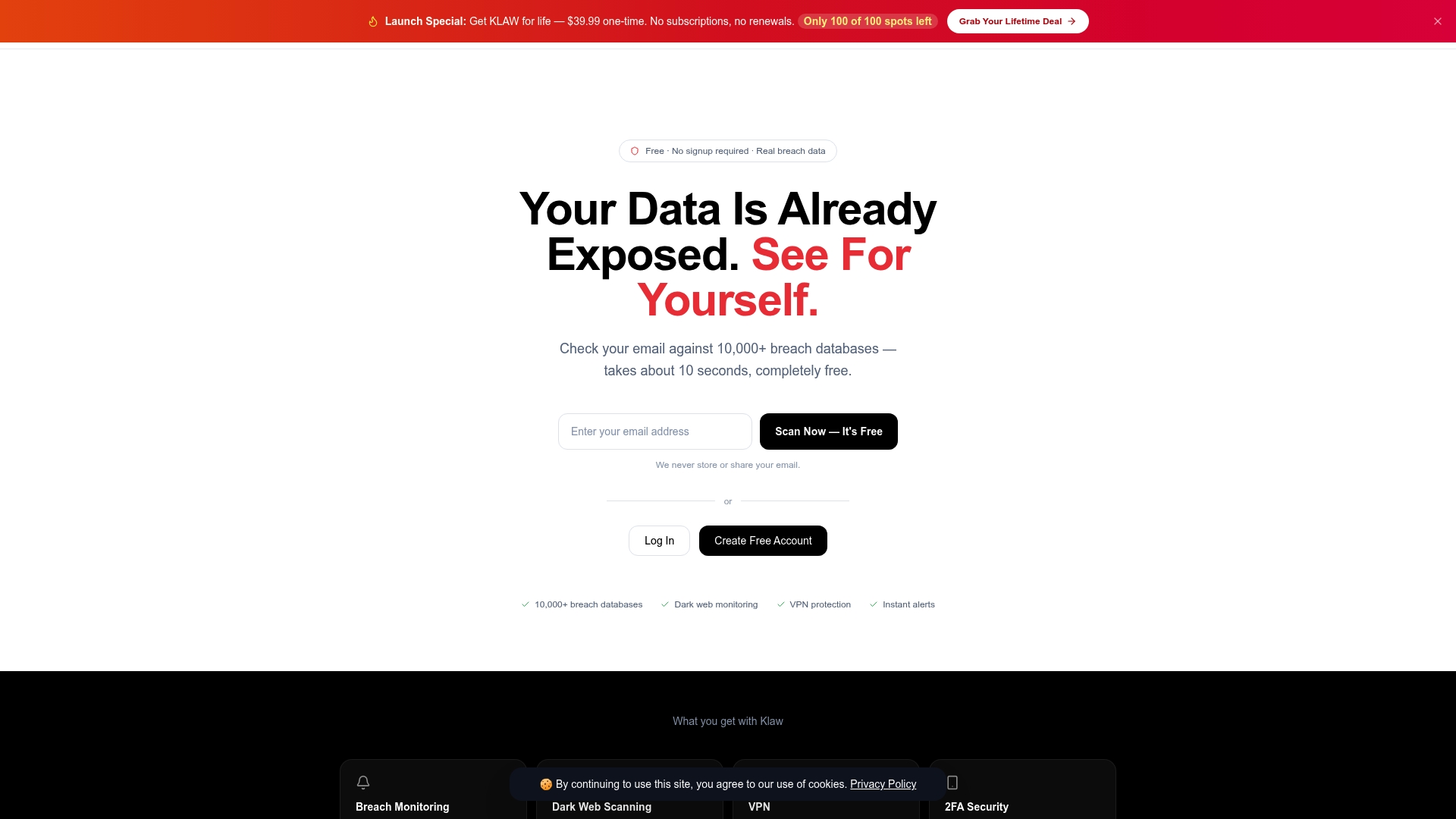
Klaw scans your email against over 10,000 breach databases and monitors dark web marketplaces for signs of your personal data. The Dark Web Alerts service sends real-time notifications the moment your credentials appear in an underground market, giving you the window to act before an attacker does. Klaw also offers a Security Trend Dashboard that tracks active threats and breach patterns relevant to your accounts. There are no hidden fees and no subscriptions required to start scanning. If your data is already circulating, Klaw tells you where and what to do next.
FAQ
How quickly is stolen data sold after a breach?
Stolen credentials typically appear on underground markets within 8 to 48 hours of infection. That speed means most victims have no chance to act before their data is already listed.
Who buys stolen data on the dark web?
Buyers include ransomware operators, Initial Access Brokers, fraud operators, and automated attackers running credential stuffing campaigns. Each buyer type targets different data tiers based on their attack method and budget.
Can stolen data still be used after a password reset?
Yes. Stolen session cookies remain valid even after a password change because they represent an already-authenticated session. Session tokens bypass MFA and work until the session expires or is manually revoked.
What makes corporate credentials more valuable than personal ones?
Domain administrator credentials can exceed $113,000 because they grant full network access, enabling ransomware attacks worth far more than the purchase price. Personal credentials typically sell for $0.05 to $5 depending on verification status.
How can I find out if my data is being sold underground?
Use a dark web monitoring service like Klaw to scan your email against breach databases and receive alerts when your credentials appear in underground markets. Early detection is the only realistic window to secure your accounts before an attacker acts.